Differences between woven and non woven geotextile tubes can be seen in several respects. For example, in terms of how they are made, tensile strength, permeability, puncture resistance, seam strength, and even their usage. Knowing the comparison between the two is certainly important to determine the right type of geotube for your project.
How Woven and Non Woven Geotextile Tubes Are Made
The first differences between woven and non woven geotextile tubes is in their manufacturing process, as follows:
Woven Geotube
Woven geotextile is made from polypropylene threads or strips that are regularly woven using a special weaving machine. This process results in geotubes with very high tensile strength and UV-resistant. They don’t stretch easily, and have pores that allow water to escape while keeping solid particles trapped inside.
Non Woven Geotube
In non woven geotextile tubes, the manufacturing process uses fibers that are needle-punched into thick sheets like felt. This type is offers superior filtration with finer pores, allowing it to trap even fine particles.

Key Differences Between Woven and Non Woven Geotextile Tubes
Here’s a comparison between woven and non woven geotubes:
|
Test Parameters |
Test Method |
Woven Geotube |
Non Woven Geotube |
|
Wide-Width Tensile |
ASTM D4595 |
Very High |
Low-Medium |
|
Elongation at Break |
ASTM D4595 |
Low |
High |
|
Pore Size AOS |
ASTM D4751 |
Consistent and measurable |
Very smooth and varied |
|
Permeability |
ASTM D4491 |
Low-Medium |
Very High |
|
CBR Puncture |
ASTM D6241 |
High |
Medium-Very High |
|
Seam Strength |
ASTM D4884 |
Very High |
Limited |
|
General Use |
– |
Wave breakers and breakwaters, coastal and river dike protection, high-pressure mud dewatering, and land reclamation. |
Low-pressure dewatering bags, ultra-fine sediment filtration for drainage, protective layers on composite geotubes. |
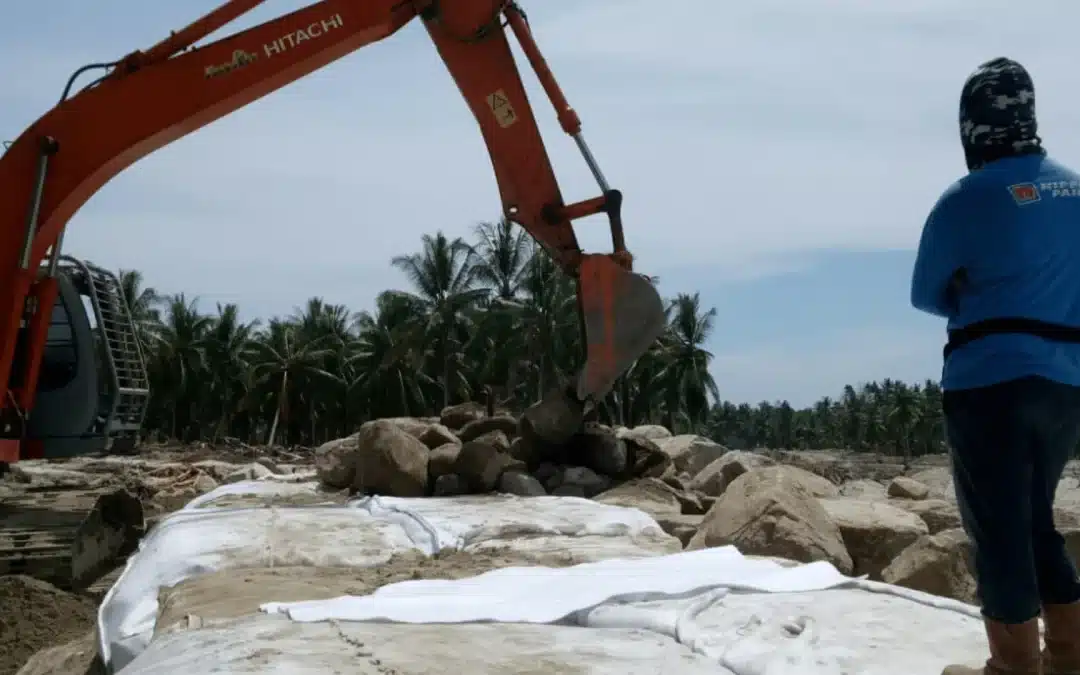
The comparison between woven and non-woven geotubes is their performance. Woven types can withstand higher internal pressure with minimal stretching, making them suitable for large tubes in the sea or reclamation projects. On the other hand, non woven types are more flexible and can filter more tightly, making them ideal for small bags filled with finer soil particles.

Which One Should You Use?
The differences in choosing between woven and non woven geotextile tubes also lies in their use, which can be determined based on the project’s needs. For example, for large-scale projects like breakwaters, and high-capacity dewatering, it’s better to use woven types. This is because woven geotubes have wide tensile strength and strong stitching, so they won’t break or deform excessively.
For small sandbag needs, light cliff protection, and other purposes using fine-grained soil, non woven types are more suitable. This is because non-woven geotextile tubes have tighter pores, so they can hold very fine particles while also allowing water to flow quickly.
Additionally, there’s a composite option that combines woven geotubes on the outside and non woven on the inside. These composite geotubes are suitable for extreme mud conditions, requiring both structural strength and very fine particle filtration.
The differences between woven and non woven geotextile tubes are pretty clear. For reclamation, breakwaters, or dewatering under high pressure, woven types are more suitable. Meanwhile, for small geobags or light cliff protection under low pressure, non woven types work well. Geotube sizes can also be adjusted according to need.
For more information about Geotube please contact: Whatsapp/Mobile Phone: +62 822 9933 3938 (Ms. Panni) or Email : info@baligeotex.com