If you’ve ever laid a garden path that sank into the soil after one wet season, or spent a weekend pulling weeds that pushed straight up through your decorative pebbles, you’ve met the problem geotextile fabric was designed to solve. It’s one of those quiet materials that does most of its work out of sight under the mulch, beneath the gravel, below the turf yet makes a real difference to how a garden holds up over the years. This guide walks through a plain geotextile fabric definition, explains how the material behaves in the ground, and looks at the practical ways gardeners and landscapers across Australia put it to use.
Geotextile Fabric Definition
Let’s start with the simple version. A geotextile fabric is a permeable textile made from synthetic fibres, usually polyester or polypropylene, that is placed in or on soil to perform a specific job: separating layers, filtering water, controlling weeds, or reinforcing the ground.
The word itself gives the definition away. Geo means earth, and textile means fabric so a geotextile is quite literally an “earth fabric.” Unlike a plastic sheet, it isn’t solid. It’s engineered to let water pass through while holding soil particles back, which is exactly what makes it so useful in a living garden where drainage still matters.
Geotextiles generally come in two families:
- Woven geotextile — made from flat tapes crossed over one another, like a basket weave. It’s strong in tension and good for stabilising ground under driveways or heavy foot traffic, but it lets less water through.
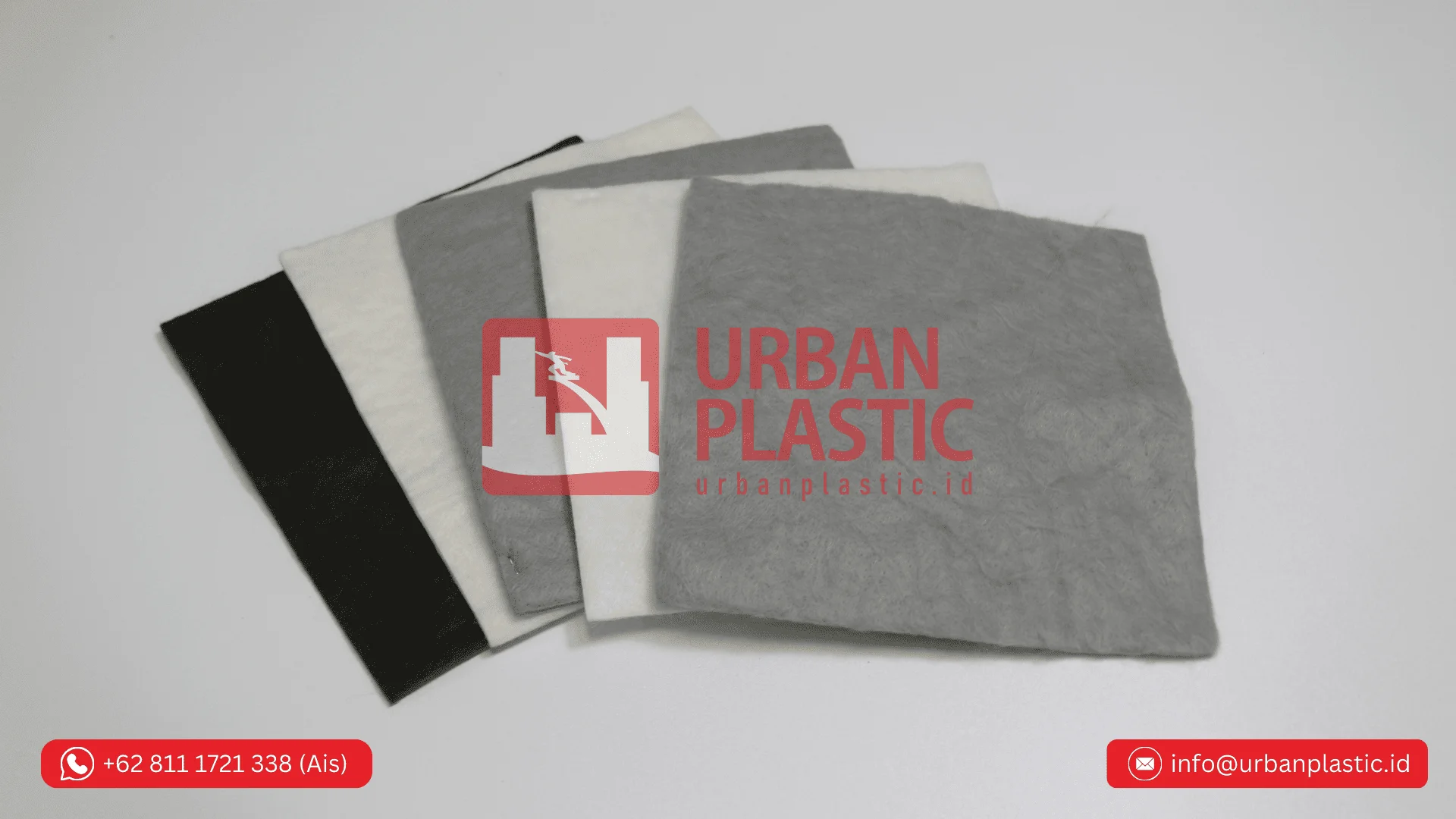
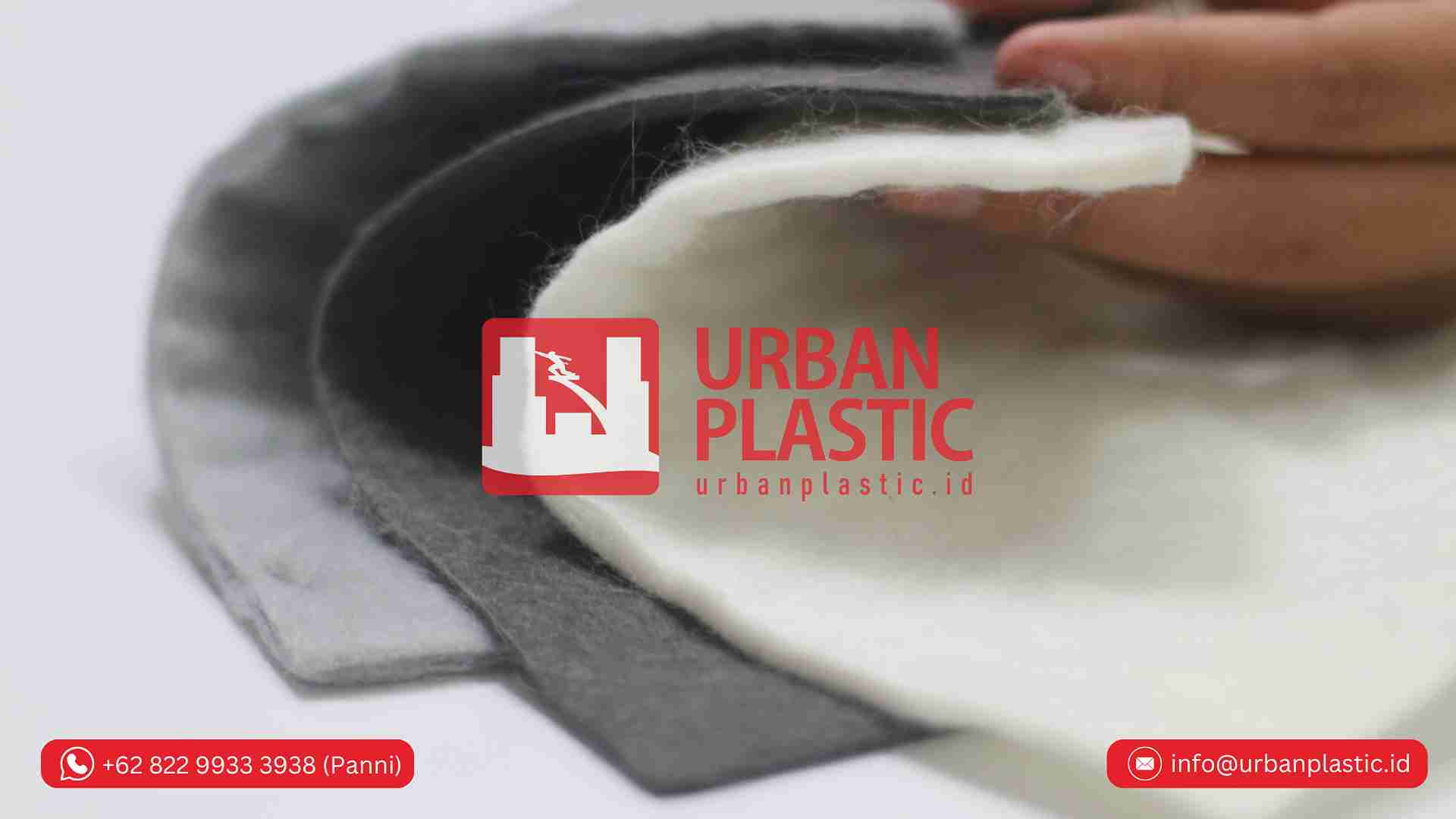
- Non woven geotextile — made from fibres bonded together into a felt-like sheet. It’s softer, more flexible, and highly permeable, which makes it the go-to choice for drainage, filtration, and most everyday garden tasks.
For the majority of home-garden and landscaping jobs, a non woven geotextile is the one you’ll reach for, and it’s the type this guide focuses on.
Why Gardeners Use Geotextile Fabric in the Garden
A garden is a layered system of soil, drainage, roots, mulch, hardscaping and problems usually start when those layers mix together. Gravel works its way into the soil, weeds find their way up, water pools where it shouldn’t. Using geotextile fabric in the garden is really about keeping each layer doing its own job. Here’s where it earns its place.
1. Weed Control That Still Breathes
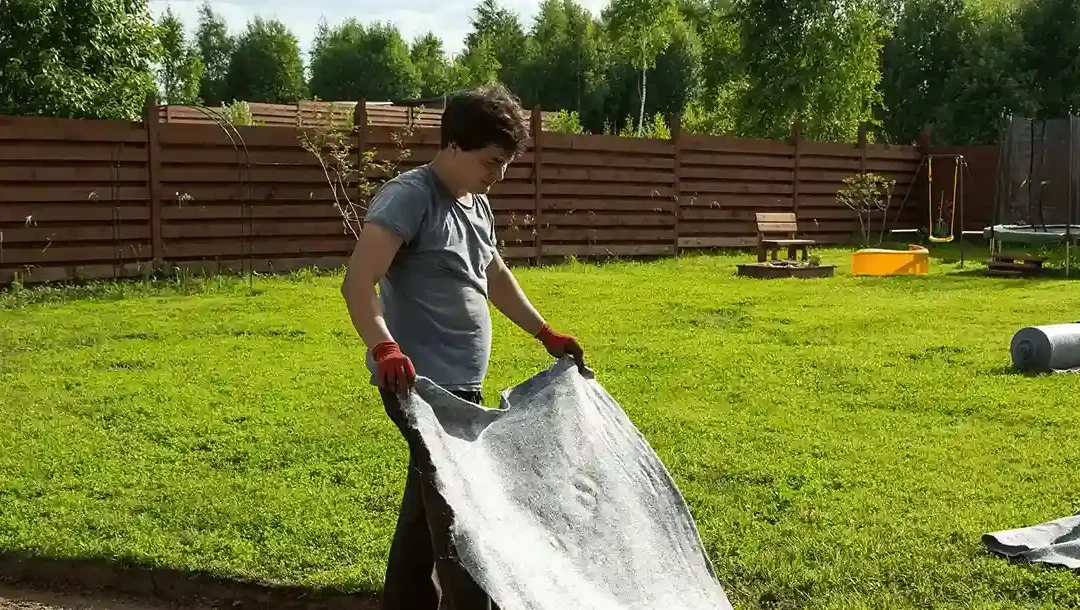
The most common reason people first buy geotextile fabric is weeds. Laid over the soil and under a layer of mulch, bark, or decorative stone, the fabric acts as a physical barrier that blocks light from reaching weed seeds below. Fewer weeds germinate, and the ones that try have a much harder time breaking through.
The advantage over plain black plastic is that a non woven geotextile is permeable. Rain and irrigation still soak through to the roots of your intended plants, and the soil underneath keeps breathing rather than turning sour and waterlogged. In an Australian summer, where you want every drop of water reaching the root zone rather than running off, that permeability matters.
2. Better Drainage and Filtration
Around agricultural drains, French drains, and soakwells, geotextile fabric works as a filter. It lets water flow freely into the drainage system while holding back the fine soil particles that would otherwise clog the pipe or gravel over time. In gardens with heavy clay soils common across much of Melbourne, Adelaide, and parts of Sydney this filtering role can be the difference between a drain that lasts years and one that silts up in a season.
3. Soil Separation and Stability
Lay a gravel path or a paved area straight onto soil and the two will slowly merge the gravel sinks, the soil rises, and within a couple of years the surface is uneven and muddy. A layer of geotextile fabric between the soil and the aggregate keeps them apart. The base stays firm, the surface stays level, and you use less gravel in the first place because none of it disappears into the ground.
4. Protecting Ponds, Raised Beds, and Retaining Walls
Behind a retaining wall, geotextile fabric wrapped around the drainage gravel stops soil from washing through and blocking the weep holes. Under a pond liner, it acts as a cushion against sharp stones and roots. In a raised garden bed, a layer at the base can separate your quality soil mix from the poorer ground below while still allowing worms and water to move through. These are small touches, but they’re the kind that quietly extend the life of a build.
Choosing the Right Fabric: A Word on GSM
When you shop for geotextile fabric, you’ll see a “GSM” figure grams per square metre. It’s simply a measure of the fabric’s weight and, roughly, its thickness and strength.
- Lighter weights (around 100–150 GSM) suit landscaping jobs weed control under mulch, lining garden beds, and light-duty separation.
- Medium to heavier weights (200 GSM and up) are chosen where there’s more load or sharper aggregate, such as under paths, driveways, or behind retaining walls.
For most garden beds and decorative areas, a lighter non woven fabric does the job well. Save the heavier grades for spots that will carry weight or take a beating.
A Few Practical Installation Tips
- Clear the ground first. Remove existing weeds, sharp roots, and large stones so the fabric sits flat and isn’t punctured from below.
- Overlap your joins. Where two sheets meet, overlap them by at least 100–150 mm so weeds and soil can’t sneak through the gap.
- Pin it down. Use landscape pegs or U-pins to hold the fabric in place, especially on slopes or windy sites, before you lay mulch or gravel on top.
- Cut neat holes for plants. For existing shrubs, cut an X-shaped slit, fold the flaps back around the stem, and tuck them under the mulch.
- Cover it up. Geotextile fabric lasts far longer when it isn’t exposed to direct sunlight. A good layer of mulch or stone protects it and keeps the garden looking finished.

Frequently Asked Questions
Is geotextile fabric the same as weed matting?
There’s overlap, but they aren’t identical. Many “weed mats” are lightweight woven fabrics made purely to block weeds. A non-woven geotextile does that too, but it’s also engineered for drainage, filtration, and soil separation, so it tends to be more versatile and hard-wearing.
Will water still drain through it?
Yes. That’s the whole point of a non woven geotextile. Its fibres are bonded rather than sealed, so water passes through while soil particles are held back. This is what separates it from a solid plastic sheet.
How long does geotextile fabric last in the garden?
When it’s kept covered by mulch or gravel and out of direct sunlight, quality geotextile fabric can last many years, often well over a decade. UV exposure is its main enemy, so the key is simply keeping it buried or covered. Can I plant directly through it? For shrubs, trees, and larger plants, yes you cut a slit and plant through it. It’s less suited to garden beds you replant often, like annual flower or vegetable beds, where you’ll be disturbing the soil each season.
The Takeaway
Geotextile fabric isn’t a glamorous material, but understanding what it is makes it easy to see why it turns up in so many well-built gardens. At its simplest, the geotextile fabric definition is an “earth fabric” a permeable textile that separates, filters, and protects the layers beneath your garden. Used thoughtfully in the garden, it keeps paths firm, drains flowing, and weeds in check, all while letting water and air move the way a healthy garden needs.
Whether you’re laying a gravel path, building a raised bed, or simply trying to spend fewer weekends weeding, a good non woven geotextile is a small investment that quietly pays off season after season.
For more information about Geotextile Non Woven please contact: Whatsapp/Mobile Phone: +62 8173 91338 (Ms. Agnes) or Email : info@baligeotex.com