Geotubes are giant tube-shaped structures made of high-strength geotextile material. This technology can withstand loads of thousands of tons while adapting to natural conditions. However, many are still curious about how they work. The most frequently asked question is: what are geotubes filled with to make them so strong and durable?
Addressing coastal abrasion, sedimentation, or solid waste accumulation is often a major challenge in infrastructure development. Conventional solutions like concrete walls are not only expensive but also less environmentally friendly. This is where geotube technology plays a crucial role.
What Are Geotubes Filled With to Maintain Stable Structures?
The question “what are geotubes filled with” is crucial to understanding the power of this technology. Geotubes are not filled with dry, solid materials like rock or concrete. Instead, geotubes are filled with slurry, a mixture of water and solid materials like sand, mud, river sediment, or seabed sediment.
The slurry is filled using a high-pressure pump. The material flows into the geotube through a special opening. The geotextile fabric acts as a filter. Solid particles are retained inside, while water slowly escapes through the fabric’s pores. This process is called dewatering.
After the water escapes, the solid material naturally settles and compacts. The end result is a heavy, dense, and highly stable structure. BaliGEOTEX geotubes are designed with a special weave to prevent fine particles from leaking out. This maintains the structure’s density and strength over the long term.

Precise and Planned Geotube Installation Process
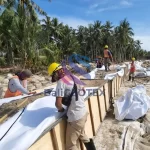
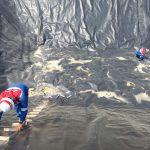
Geotube installation requires careful technical planning. The initial stage begins with site preparation. The ground surface must be leveled and cleared of sharp objects. Typically, an additional layer of geotextile is installed as a backing to prevent damage.
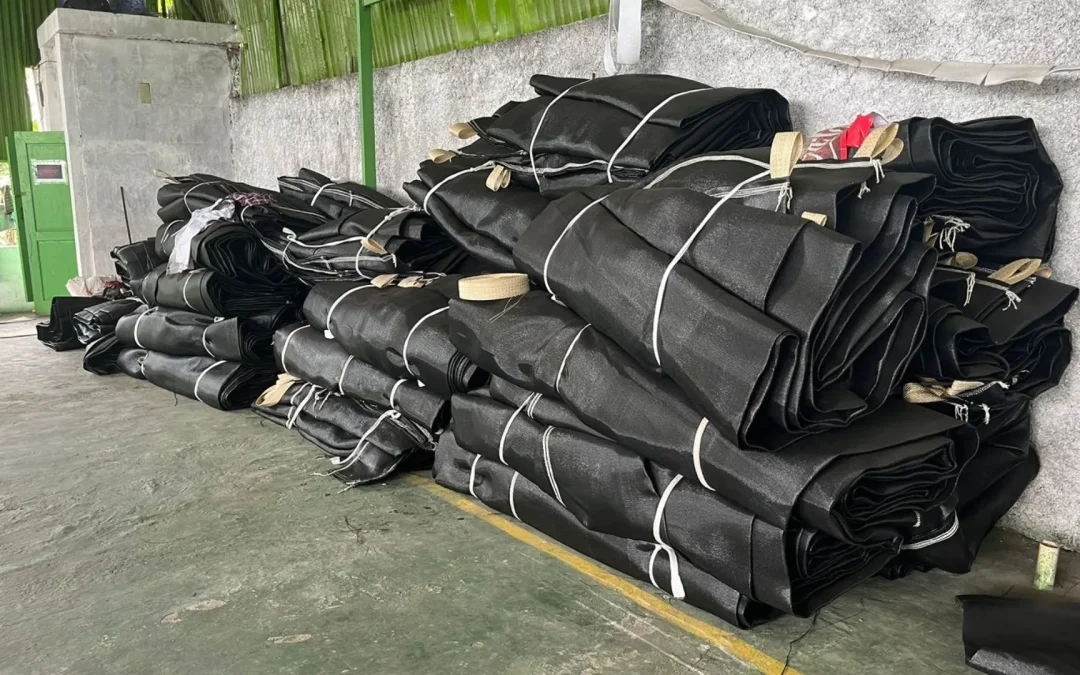
Afterward, the BaliGEOTEX geotubes, still folded, are laid out at the project site. Sizes vary depending on requirements. On large-scale projects, geotubes can be tens of meters long. The slurry filling process is carried out in stages. The technical team must monitor the pressure to prevent overfilling.
During the dewatering process, water escapes slowly and the material settles evenly. Good control at this stage determines the success of the structure. Proper installation will result in a geotube that is sturdy and precisely aligned with the initial design.

Benefits of Geotubes for the Environment and Infrastructure
The use of BaliGEOTEX geotubes offers many tangible benefits. In coastal protection projects, geotubes function as breakwaters or embankments to prevent abrasion. These structures can dampen wave energy without damaging the ecosystem.
Over time, geotubes can be covered with sand or covered with natural vegetation, allowing them to blend seamlessly with the surrounding environment. From a waste management perspective, geotubes are highly effective for dewatering industrial sludge or river sediment. Waste volume is drastically reduced, resulting in more efficient transportation and disposal costs.
Compared to concrete structures, geotubes are more flexible, economical, and quick to install. This is why many modern projects are turning to geosynthetic solutions.
Geotube technology is a smart solution to address today’s abrasion and sediment management challenges. By understanding what are geotubes filled with, the installation process, and their long-term benefits, you can make more informed decisions for your infrastructure projects.
For more information about Geotube please contact: Whatsapp/Mobile Phone: +62 822 9933 3938 (Ms. Panni) or Email : info@baligeotex.com