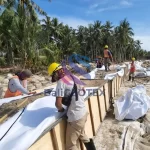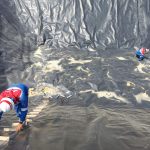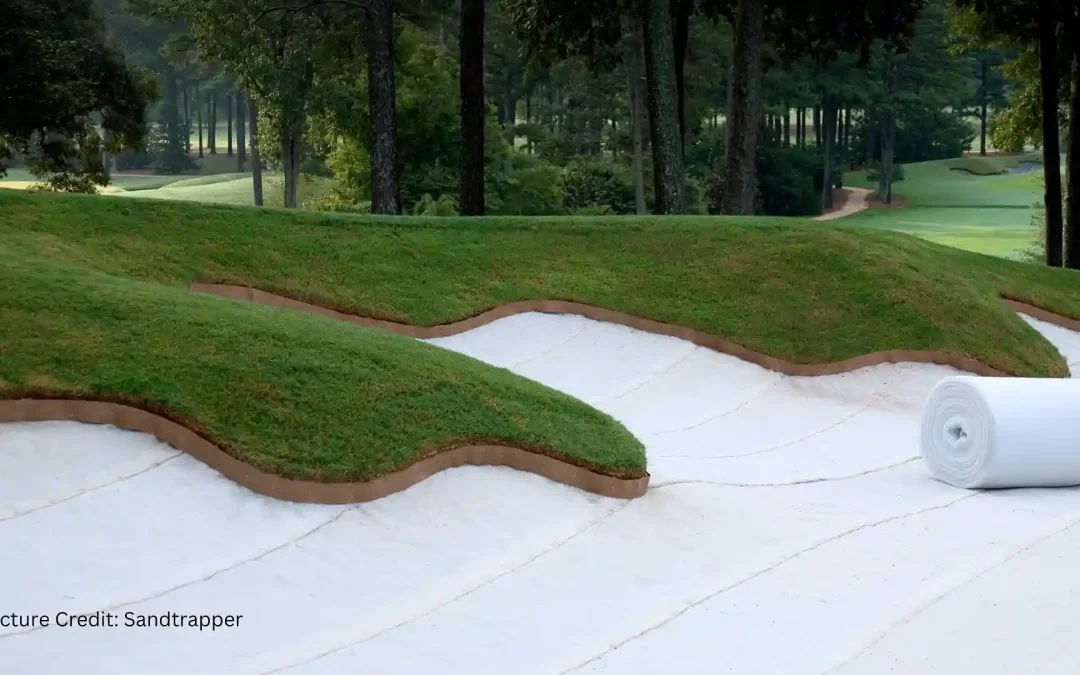
Sandy soil structures are very susceptible to shifting. Their bearing capacity is also very low. This presents a significant challenge for desert project workers. Not all materials are suitable for these areas. Therefore, contractors must understand the geotextile fabric types suitable for desert soil stabilization. This step is crucial before starting a project. Desert soil is highly unstable. Be sure to use highly durable geosynthetic materials.
Learn More About the of Geotextile Fabric Types Suitable for Desert Soil Stabilization
Desert areas experience strong winds, which cause erosion of the sand. Furthermore, extreme temperatures can affect the soil conditions. These conditions require high-quality, durable geotextile materials. This can strengthen the soil layer. Failure to do so can cause foundation subsidence, increasing the risk of damage.
Construction Challenges in Desert Areas
Desert soil is characterized by loose sand grains lacking strong cohesive bonds. Therefore, the soil easily subsides under heavy loads, such as from vehicles or building structures. Strong winds and temperature changes can also accelerate the deterioration of the foundation itself.
Without a soil stabilization system, there’s a risk of cracking, shearing, and even foundation failure. Geosynthetic materials now offer a solution, addressing these issues on sandy soils.
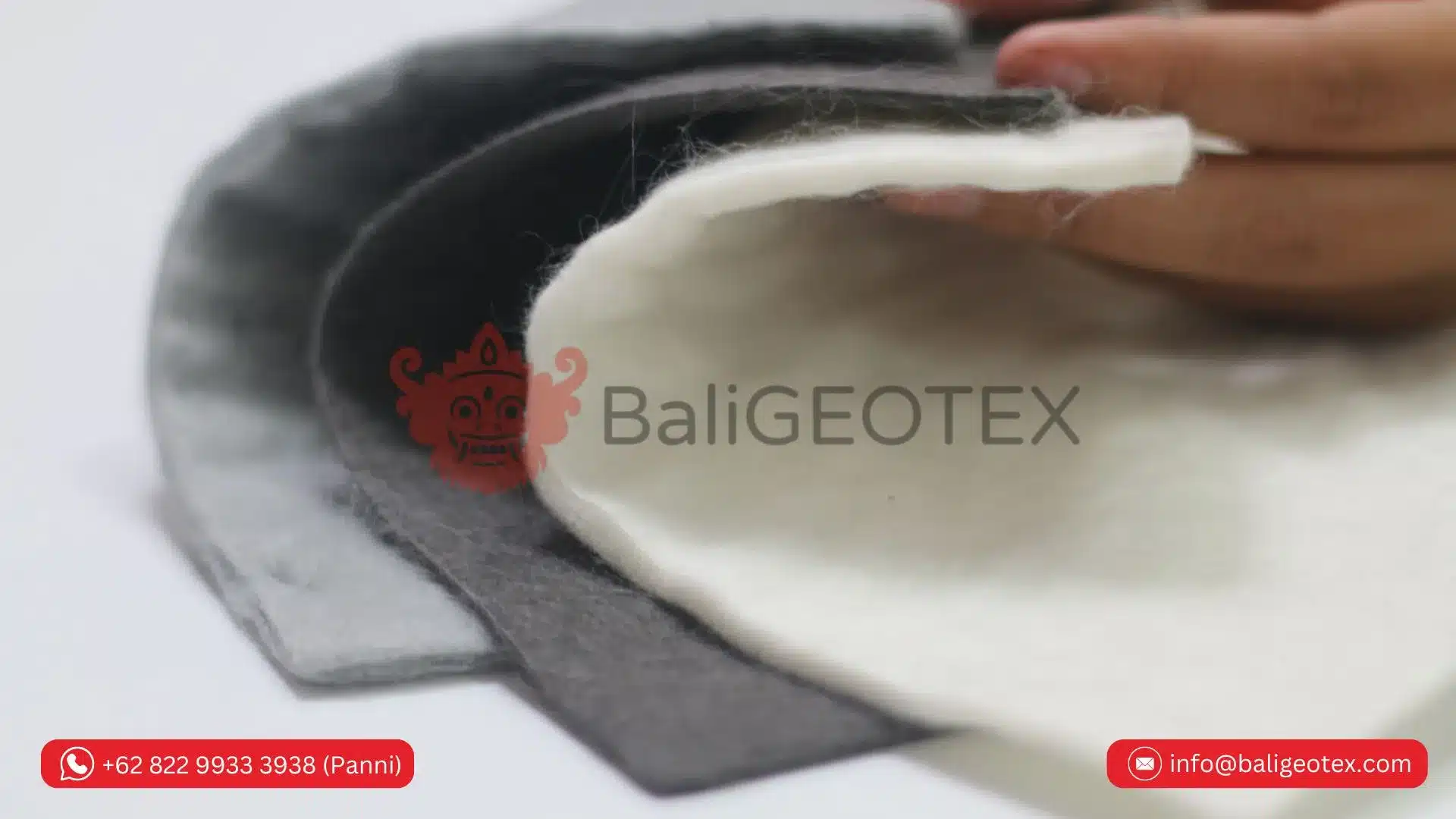
Recommended Types of Geotextile Fabric Suitable for Desert Soil
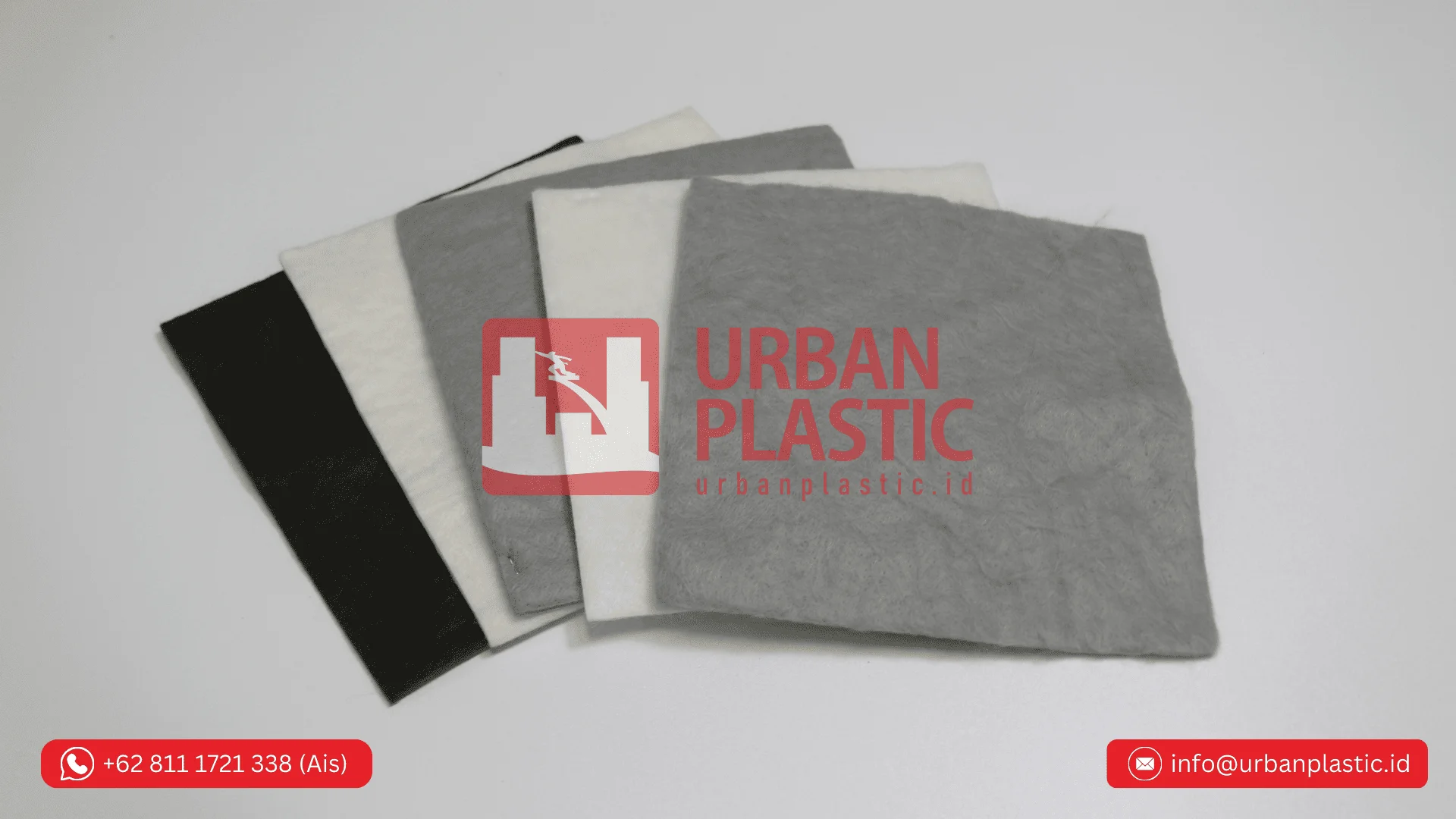
When talking about desert areas, the climate and soil structure are extreme. Therefore, not all types of geotextiles can be used. Each type has different physical characteristics and working mechanisms. Materials with high durability and climate resistance are required. Recommended geotextile fabric types are woven geotextile and non-woven geotextile.
Woven geotextile is a type of fabric made by a weaving process. It is generally made from polypropylene or polyester, woven into a woven sheet. The resulting sheet is textured with high density and strong weave.
This material is a geotextile fabric type for reinforcement purposes. Why? Because it has very high tensile strength and low elongation. When placed in desert areas, this material can distribute the load evenly, thus preventing the ground beneath it from sinking or collapsing.
Meanwhile, this non-woven geotextile fabric is suitable as a separating and filtering layer. This type is highly effective in preventing new aggregate deposits from mixing with the sand beneath. Furthermore, this material is able to resist the movement of sand particles and prevent erosion.
Important Criteria Before Choosing Desert Geotextiles
Not all types of geotextiles are suitable for use in extreme environments. Therefore, choose a type based on its UV resistance. Therefore, choose a geotextile fabric with UV protection to prevent brittleness. Furthermore, sand is easily moved, requiring geotextiles with high tensile strength. This helps resist the shear forces of sandy soil. Also, ensure the pore size is appropriate for the project to ensure optimal filtration.
Combination of Geotextiles and Geogrids for Maximum Results
For large-scale projects in desert areas, a combination of geotextiles and geogrids is necessary. You’ll still need a geotextile fabric for separation. The geogrid also provides mechanical locking to the overlying material.
Applying geotextile fabric types suitable for desert soil stabilization is crucial. However, it’s important to emphasize that the combination of geotextiles and geocells can maintain the stability of building structures, even in extreme areas. This material maintains the stability of desert soil.
For more information about Geotextile Non Woven please contact: Whatsapp/Mobile Phone: +62 8173 91338 (Ms. Agnes) or Email : info@baligeotex.com