![geotextile bag / geobag merk BaliGEOTEX[1]](https://indonesiageotextilefabric.com/wp-content/uploads/2026/02/geobag-merk-BaliGEOTEX-3_17_11zon-1080x675.webp)
The difference between geobags and traditional sandbags for erosion control is a crucial topic in modern civil engineering. The use of appropriate materials is crucial to the success of erosion control projects in rivers, beaches, and slopes. Therefore, a thorough understanding helps select solutions that are efficient, durable, and environmentally friendly.
The Complete Difference Between Geobags and Traditional Sandbags for Erosion Control
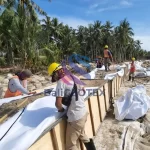
Geobags are bags made from geotextiles such as polypropylene (PP) or polyester (PET) designed for civil engineering applications. This material belongs to the geosynthetic category with high filtration and permeability capabilities. Meanwhile, traditional sandbags are usually made from burlap or simple woven plastic for temporary use.
Sandbags are more popular as an emergency solution during floods or critical conditions. Their simple structure makes them easy to use, but their long-term use is limited. This fundamental difference is at the heart of the difference between geobags and traditional sandbags for erosion control.
Material and Durability
Geobags use woven or non-woven geotextile materials with high tensile strength. This material can also withstand UV exposure for more than 2,000 hours while maintaining approximately 90% of its initial strength. Furthermore, geobags are resistant to extreme conditions with a temperature range of -40°C to 80°C.
In contrast, traditional sandbags tend to deteriorate quickly due to exposure to sunlight and moisture. Within six months, their strength can decrease by up to 50%. This represents a significant difference in durability and resilience.
Long-Term Lifespan and Efficiency
Geobags are suitable for long-term use, with a lifespan of between 5 and 25 years. In some project studies, this material has even lasted more than 10 years without significant functional degradation. This makes it suitable for permanent protection such as coastal protection and riverbank stabilization.
Traditional sandbags only last a few months to a maximum of 1–3 years. After that, the material becomes brittle, and the sand content is easily released. This difference in lifespan is one of the main factors determining the difference between geobags and traditional sandbags for erosion control.
![geotextile bag merk BaliGEOTEX[6]](https://indonesiageotextilefabric.com/wp-content/uploads/2026/02/geobag-merk-BaliGEOTEX-8_4_11zon.webp "geotextile bag merk BaliGEOTEX[6]")
Technical Performance and Filtration
Geobags are permeable, allowing water to flow with a permeability coefficient of around 10⁻⁴ to 10⁻⁶ cm/s. However, this material still retains soil particles, preventing soil erosion. This function, known as filtration performance, is crucial in civil engineering projects.
Traditional sandbags have a higher permeability, around 10⁻² to 10⁻³ cm/s. As a result, soil particles can easily escape, making the structure less stable. In terms of engineering performance, geobags are far superior.
Installation and Construction Efficiency
Geobags also offer a faster installation process, up to 40% faster than traditional methods. Filling can be done mechanically, reducing labor requirements by 30–50%. Their flexibility also allows for adjustments to complex land contours.
Meanwhile, traditional sandbags require manual filling, which is time-consuming and labor-intensive. In large projects, this significantly increases operational costs. Construction efficiency is one of the main advantages of geobags.
Environmental Impact and Sustainability
Geobags are popular as an eco-friendly solution because they support biointegration. Vegetation can grow on the geotextile surface, enhancing natural stability. Furthermore, the material is recyclable, reducing construction waste.
Traditional sandbags tend to become waste after they break down. Materials like burlap or plastic also lack the ability to integrate with the environment. In the long term, this negatively impacts the ecosystem.
![geotextile bag merk BaliGEOTEX[2]](https://indonesiageotextilefabric.com/wp-content/uploads/2026/02/geobag-merk-BaliGEOTEX-12_22_11zon.webp "geotextile bag merk BaliGEOTEX[2]")
Economic Efficiency
Geobags are indeed more expensive initially, ranging from $2.5–4.00 per unit. However, operational costs can decrease by up to 35%, and total lifecycle costs can be reduced by up to 60% within 10 years. In flood control projects, the use of geobags has been shown to increase the speed of construction by 48% and reduce maintenance costs by up to 70%.
Traditional sandbags have a lower initial cost, around $0.8–1.50 per unit. However, replacement frequency can be 3–5 times more frequent, resulting in significantly higher long-term costs. This fact further emphasizes the economic difference between geobags and traditional sandbags for erosion control.
A comparison between geobags and traditional sandbags shows significant differences in material, durability, technical performance, and cost efficiency. Geobags excel in almost all aspects, especially for long-term applications and sustainable projects. Meanwhile, sandbags remain relevant for emergency or temporary needs.
With these advantages, material selection must be tailored to project needs and environmental conditions. For optimal and sustainable erosion protection, geobags are a more effective modern solution. All these advantages clearly summarize the difference between geobags and traditional sandbags for erosion control.
For more information about Geobag please contact: Whatsapp/Mobile Phone: +62 822 9933 3938 (Ms. Panni) or Email : info@baligeotex.com