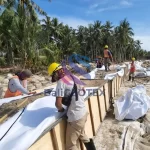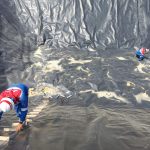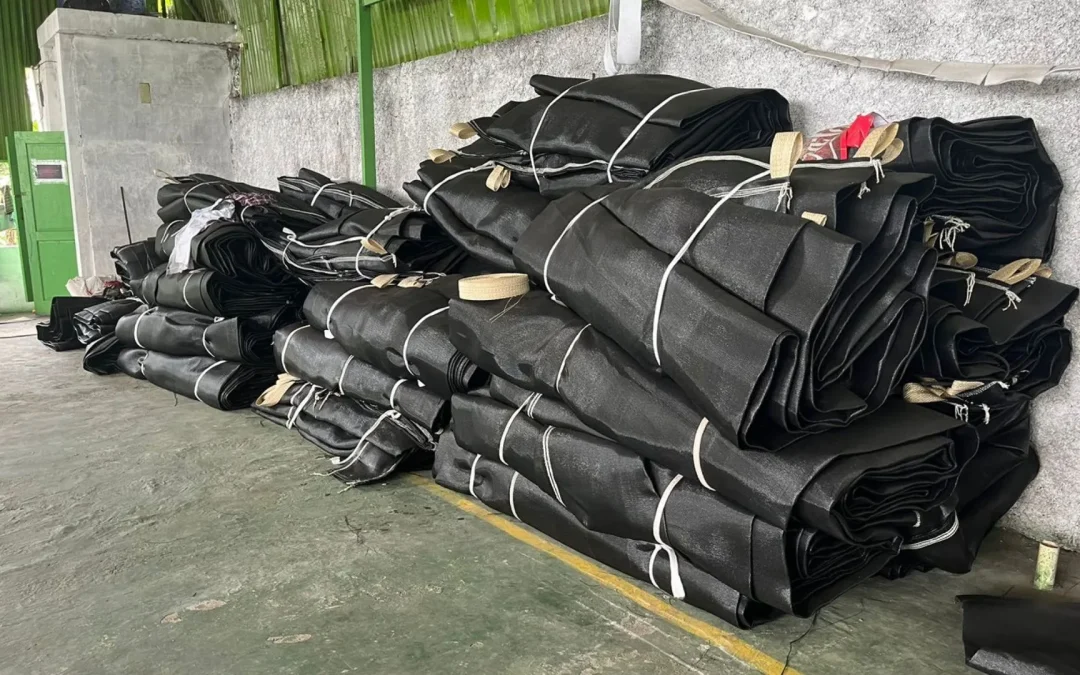
A geotube breakwater is a device used to protect the shoreline from wave action that causes abrasion. Geotubes help dissipate wave energy before it reaches the coastline. Their use mitigates erosion and serves as a component of coastal protection systems.
Understanding the Use of Geotube Breakwaters in Coastal Protection Projects
Coastal areas are vulnerable to changes caused by continuous wave action and ocean currents. These conditions lead to coastal abrasion, a process of erosion that can result in land loss, infrastructure damage, ecosystem disruption, and impacts on the livelihoods of coastal communities. Such impacts can threaten settlements, public facilities, conservation areas, and economic activities like fishing and tourism.
To mitigate these risks, geotubes (or geotextile tubes) are an excellent solution to implement. So, why are they important in coastal protection projects? Let’s explore this further.
What Is a Geotextile Tube?
A geotube, or geotextile tube, is a large tube made from high-strength geotextile material, filled with sand or other materials depending on project requirements. Once fully filled, the structure forms a barrier that helps dissipate wave energy and control sediment movement.
Beyond coastal protection, geotubes are widely used for flood control, dewatering operations, and various environmental projects particularly those requiring highly flexible geosynthetic solutions.


The Role of Geotextile Tubes as an Alternative to Breakwaters
Fundamentally, a breakwater is a structure built to reduce ocean wave energy before it reaches a protected area. Breakwaters help safeguard shorelines, harbors, and various coastal infrastructure from the impact of excessive wave action.
In practice, the construction of breakwaters does not always have to rely on stone or concrete. Modern projects are increasingly relying on flexible geosynthetic solutions, specifically geotextile tubes (geotubes) used as breakwaters.
A key advantage of geotubes is their ability to provide protection much faster than conventional methods. As a modern breakwater solution, they offer several benefits, including:
- Faster installation process
- Ability to use local materials as fill
- Simple material mobilization requirements
- Flexibility across various coastal conditions
- Suitability as a temporary solution prior to permanent structure construction
What Is the Service Life of a Geotube?
In reality, a geotube’s service life depends on the type of geotextile fabric, environmental conditions, fill material, and maintenance. Its lifespan is determined by project requirements; some geotubes are removed after project completion, while others remain in place as part of a permanent structure.
The geotextile fabric used for geotube breakwaters is engineered to withstand diverse environmental conditions, including UV exposure, temperature fluctuations, and chemical exposure. With proper installation and maintenance, geotubes can last for several years.
For temporary applications such as dewatering or emergency flood control geotubes may be used for periods ranging from a few months to a few years. Conversely, for permanent applications like shoreline protection and construction projects, they can be designed for long-term durability, potentially lasting decades depending on usage conditions.
Over time, geotextile fabric can deteriorate due to environmental exposure and wear and tear. Therefore, routine inspection and maintenance are crucial to detect damage early and extend the material’s service life.
Geotube breakwaters are widely used geosynthetic solutions for coastal protection projects. They effectively reduce wave energy and control coastal erosion. This vital role makes them an effective and flexible alternative for coastal protection construction.
For more information about Geotube please contact: Whatsapp/Mobile Phone: +62 822 9933 3938 (Ms. Panni) or Email : info@baligeotex.com