The use of geotextile for road stabilisation and subgrade separation has become a reliable solution in modern road construction. Soft or uneven subgrade soil is often the primary cause of premature road deterioration.
Geotextiles address this issue by separating the subgrade from the road base layer. This enhances the road’s structural strength and allows vehicle loads to be distributed evenly across the surface.
The Use of Geotextile for Road Stabilisation and Subgrade Separation: Key Functions Determining Road Strength
Geotextiles play a crucial role in road stabilisation and subgrade separation. Without a separation layer, fine-grained soil can easily mix with base layer materials, drastically reducing the soil’s load-bearing capacity.
Geotextiles act as a reliable separation layer, preventing soil particles from mixing with base layer aggregates. Furthermore, the material provides additional load-bearing support, enabling the road to withstand heavy traffic loads without suffering uneven surface settlement over its long service life.
1. Preventing the Mixing of Soil Layers and Aggregates
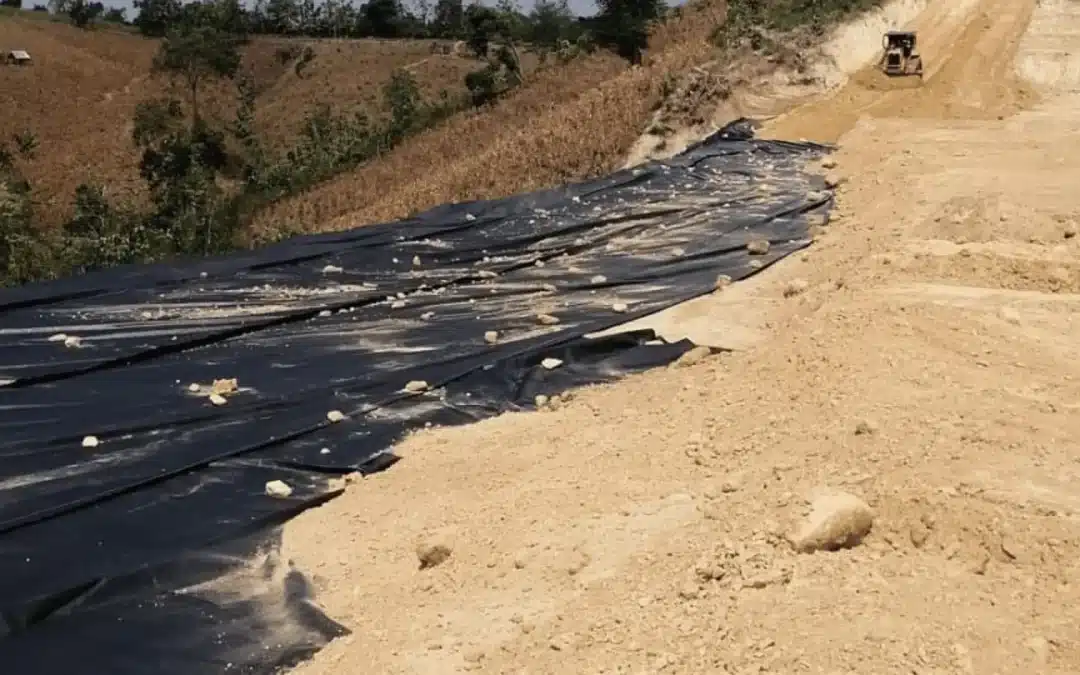
A fundamental function of woven geotextiles is to separate the subgrade from the road base layer. The material prevents soft subgrade soil from migrating into the voids between base stones or gravel, thereby maintaining the integrity and stability of the road structure. Without this separation, fine soil particles would gradually infiltrate the gaps between aggregates, causing the road surface to settle and become uneven, which ultimately damages the asphalt layer above.
![Woven Geotextile BaliGEOTEX [1]](https://indonesiageotextilefabric.com/wp-content/uploads/2026/02/Woven-Geotextile-BaliGEOTEX_12_11zon.webp "Woven Geotextile BaliGEOTEX [1]")
![Woven Geotextile merk BaliGEOTEX[2]](https://indonesiageotextilefabric.com/wp-content/uploads/2026/02/Woven-Geotextile-BaliGEOTEX-3_9_11zon.webp "Woven Geotextile merk BaliGEOTEX[2]")
2. Enhancing Soil Load-Bearing Capacity
Geotextiles help reinforce the load-bearing capacity of weak subgrade soil. When vehicle loads exert pressure on the road surface, the geotextile distributes the load over a wider area, significantly reducing the stress transmitted to the subgrade. This ensures road stability even when constructed on poor-quality soil and eliminates the need to replace the entire subgrade layer with superior material.
3. Improving Drainage and Reducing Water Pressure
In addition to serving functions of separation and reinforcement, this material offers excellent water permeability. Rainwater infiltrating the road structure can drain rapidly through the material’s pores, preventing water accumulation between the material and the base layer. Trapped water can soften the soil and compromise road strength; therefore, this drainage capability is crucial for maintaining structural integrity across various weather conditions.
4. Cost Savings and Extended Road Service Life
Using this material provides tangible economic benefits for road construction projects. This separation layer reduces the volume of stone and gravel required for the base layer compared to conventional methods. Furthermore, roads constructed with this material enjoy a significantly longer service life because premature damage is effectively prevented. This results in substantially lower long-term maintenance and repair costs.
5. Proper Installation for Optimal Results
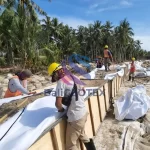
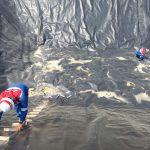
Correct installation is essential for the material to function optimally. The ground surface is leveled first; then, the material is laid out neatly and secured with fasteners to prevent shifting during the placement of overlying materials. Adjacent sheets of material must overlap sufficiently to eliminate gaps that could allow soil to penetrate the road layers. Careful workmanship ensures the material performs exactly as designed.
Utilizing geotextile for road stabilisation and subgrade separation is a smart strategy for building robust, durable, and cost-effective roads. Incorporate woven geotextiles into every road project to ensure high-quality, long-lasting construction capable of withstanding traffic loads and changing weather conditions. For more information about Geotextile Woven please contact: Whatsapp/Mobile Phone: +62 822 9933 3938 (Ms. Panni) or Email : info@baligeotex.com