Amid the growing need for efficient wastewater treatment systems, how to use geotubes has attracted the attention of many industry players. Geotextile tube technology is considered a practical solution for dewatering, or separating water from solid materials, with more optimal results than conventional methods.
For sectors such as aquaculture, wastewater treatment, and infrastructure projects, high sludge volumes often present operational challenges. With geotubes, the dewatering process can be faster, waste volume significantly reduced, and management costs more manageable.

How to Use Geotubes for Waste Management
Geotubes, or geotextile tubes, are large tubes made of high-strength geotextile material. These structures are designed to contain slurry, a mixture of water and solid materials such as mud, sediment, or organic waste.
This technology is widely used in sludge dewatering projects, aquaculture wastewater treatment, sludge wastewater treatment, and shoreline protection. One of its main advantages is its ability to rapidly reduce water content, resulting in significantly smaller waste volumes.
In some applications, geotextile tubes can increase solids content by more than 30 percent in a relatively short time. This significantly reduces logistics and storage costs. The following are the stages of use geotubes system commonly implemented in the field:
1. Site Preparation
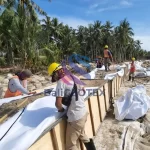
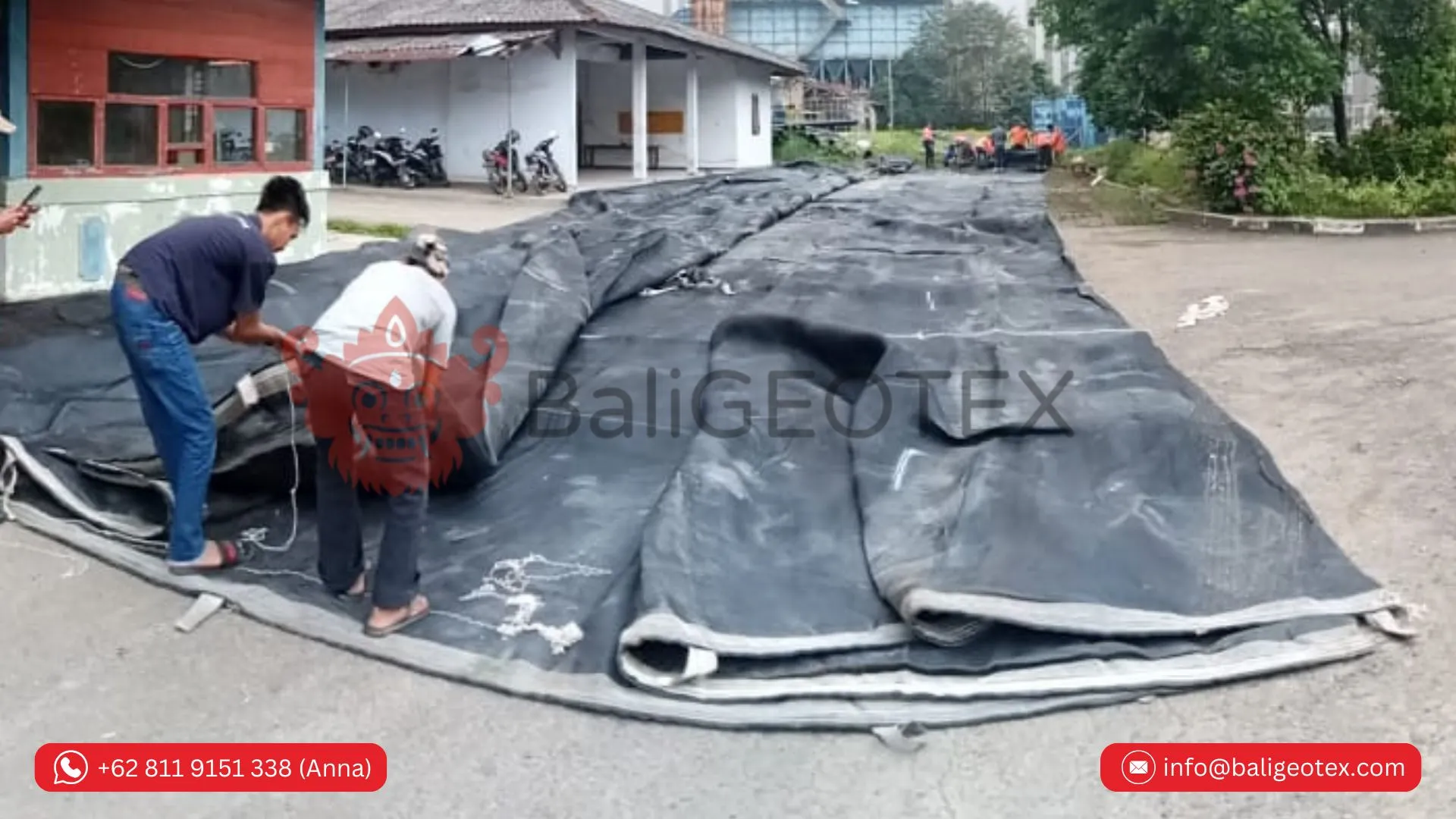
The first stage is preparing the installation area. The ground surface must be flat, stable, and free of sharp objects that could damage the tube material. In some projects, an additional geotextile layer is installed as an underlayment to provide extra protection and maintain structural stability.
2. Geotube Placement
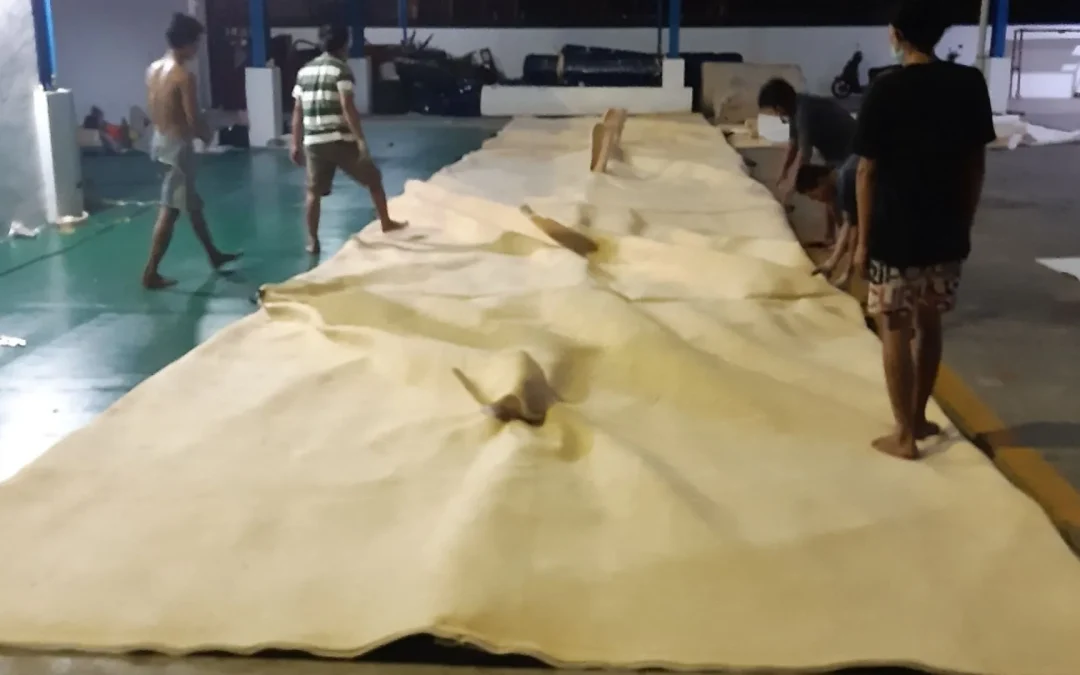
Once the site is ready, the geotubes are unfolded and placed according to the project design. Initially, geotubes are typically shipped folded for easy mobilization. The size of the geotubes can be adjusted to suit the waste capacity to be treated, ranging from small volumes to large industrial scale.
3. Material Filling Process
A mixture of sludge and water is pumped into the geotubes through the fill port located at the top of the tube. Filling is usually done in stages. This method is important to allow time for the initial dewatering process before additional material is added.
4. Dewatering Process
This is the core stage of the geotube system. Water will escape through the pores of the geotextile, while the solid material remains trapped inside the tube. As more water escapes, the waste volume shrinks. This process allows for repeated filling until the maximum capacity is reached.
5. Monitoring and Maintenance
Throughout the process, the operator must ensure stable filling pressure. Filling too quickly can increase the risk of damage. The filtered water must also be properly managed before being released back into the environment.
Why Are Geotubes Effective for Aquaculture Waste?
In the aquaculture sector, solid waste often has a very high water content. This increases transportation and storage costs. With geotube technology, sludge can be dewatered more quickly than conventional methods. The thickened material is also easier to reuse, such as for compost or land application.
Furthermore, geotubes offer competitive installation costs, minimal maintenance, are easy to transport, and are suitable for a variety of site conditions.
BaliGEOTEX products offer a modern approach to dewatering, reducing waste volume, and ensuring safer final storage. For companies looking to improve operational efficiency while maintaining environmental sustainability, understanding how to use geotubes can be a long-term strategic step.
For more information about Geotube please contact: Whatsapp/Mobile Phone: +62 822 9933 3938 (Ms. Panni) or Email : info@baligeotex.com