How to select the right woven geotextile for drainage projects is a crucial step in ensuring optimal and durable drainage systems. Selecting the right material can increase soil stability by up to 30% and extend the structure’s lifespan by 15–50%. Without proper analysis, the risk of clogging, subsidence, and system failure can increase significantly.
How to Select the Right Woven Geotextile for Drainage Projects for Optimal Drainage Systems
Woven geotextiles are materials made from woven synthetic fibers such as polypropylene (PP) and polyester (PET). This material has a high tensile strength of around 200–800 kN/m according to ASTM D4595 standards. Its primary function is reinforcement and separation rather than pure filtration.
Essentially, woven geotextiles are sheet-shaped geosynthetic materials made by weaving synthetic polymer fibers such as polypropylene or polyester. Their woven structure provides very high tensile strength. This material is also resistant to UV exposure.
Woven geotextiles are often used to reinforce soft soil and increase road stability. Furthermore, this material functions as a separator between soil layers. Its use helps maintain a strong and durable structure.
In drainage projects, woven geotextiles are often used to stabilize water-saturated subgrade. However, for pure filtration, non-woven geotextiles are often superior due to their higher permeability. Understanding these functions is crucial before making a choice.
Clearly Define Project Objectives
The first step is to understand whether the project focuses on drainage, filtration, or reinforcement. If the primary goal is to strengthen soft soil, woven geotextiles are ideal. However, if the primary goal is water filtration, then you must choose a woven geotextile based on specific parameters.
A common mistake occurs when you don’t match the function to the type of geotextile. This can lead to clogging or a reduction in performance of up to 20%. Therefore, identifying the objective is the basis for how to select the right woven geotextile for drainage projects.
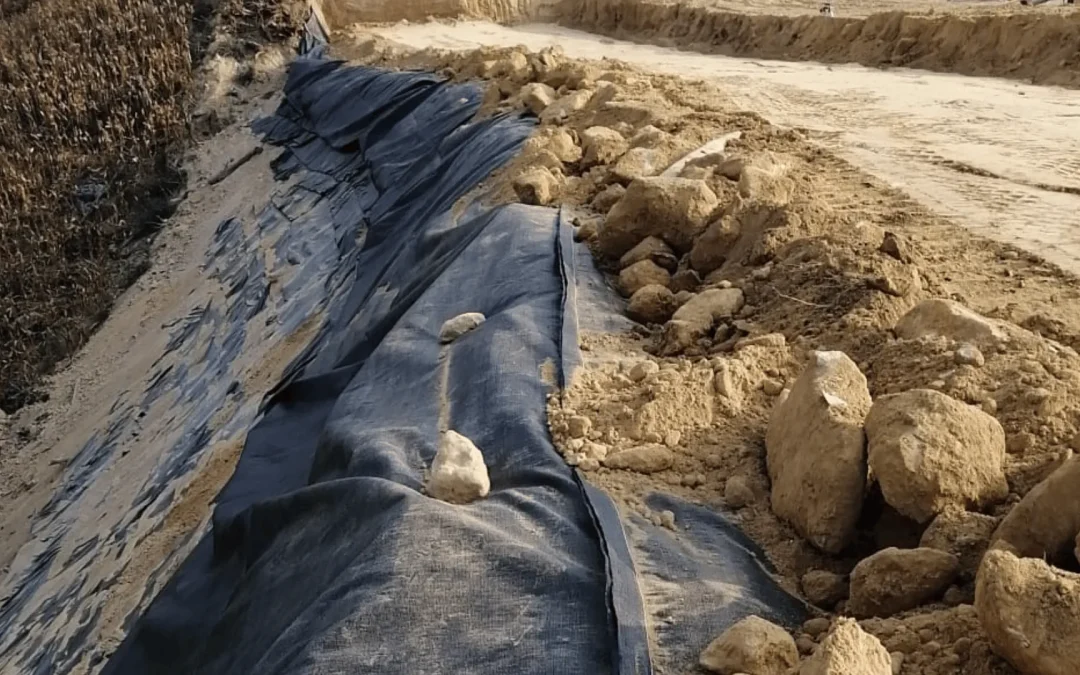
![Woven Geotextile merk BaliGEOTEX[1]](https://indonesiageotextilefabric.com/wp-content/uploads/2026/02/Woven-Geotextile-BaliGEOTEX-4_10_11zon.webp "Woven Geotextile merk BaliGEOTEX[1]")
Pay Attention to Permeability and AOS Values
Permeability indicates the ability of water to flow through a material, typically ranging from 10¹ to 10¹ cm/s. This value is tested using ASTM D4491 and is crucial in drainage systems. Furthermore, the Apparent Opening Size (AOS) parameter determines pore size.
The AOS is generally in the range of 0.07–0.2 mm to maintain a balance between water flow and soil retention. If it is too large, soil can escape. If it is too small, the risk of clogging increases by 15–20%.
Tensile Strength and Load Resistance
Tensile strength is a key factor in heavy-duty applications. For roads or construction areas, a minimum of 50–200 kN/m is required. For heavy-duty applications, it can even reach over 200 kN/m.
High-strength materials can increase soil stability by up to 30%. Furthermore, the use of woven geotextiles can reduce deformation and rutting by up to 40%. This makes the structure more durable.
Puncture Resistance and the Environment
The next step in how to select the right woven geotextile for drainage projects is to consider its puncture resistance. Puncture resistance ranges from 800–5,500 N according to ASTM D4833. This value is important to ensure the material doesn’t break during installation on rocky terrain. This resistance also helps reduce the risk of damage by up to 15%.
Additionally, woven geotextiles must be resistant to a pH of 2–10. Polypropylene material can withstand up to 95% of soil chemical exposure. Combined with 2–3% UV stabilizer, the material can last 5–10 years in open conditions.
![Woven Geotextile merk BaliGEOTEX[3]](https://indonesiageotextilefabric.com/wp-content/uploads/2026/02/Woven-Geotextile-BaliGEOTEX-2_8_11zon.webp "Woven Geotextile merk BaliGEOTEX[3]")
Pore Structure and Drainage System
Woven geotextiles have macropore and micropore structures. Macropores are suitable for fast water flow with a capacity of 5–50 L/m²/second. Micropores are more effective for fine soil filtration.
The choice of pore structure must also be adjusted to the soil conditions. Clay soils require tighter filtration control, while granular soils require faster water flow.
Sample Testing and Technical Standards
Before purchasing large quantities, conduct sample testing. Tensile strength, puncture resistance, and permeability tests are basic standards. Ensure the material meets standards such as ASTM or AASHTO.
This step can increase project reliability by up to 95%. Furthermore, initial testing helps avoid repair costs, which can reach 20–25% of the total project. This is a crucial step in ensuring the success of how to select the right woven geotextile.
Selecting a woven geotextile cannot be done haphazardly. Many technical factors, such as AOS, tensile strength, and environmental resistance, must be considered. With the right approach, this material can increase project life by 15–50% and significantly save costs.
By understanding all these parameters, you can determine the material that best suits your project’s needs. This approach ensures the drainage system remains optimal in the long term. That’s the essence of how to select the right woven geotextile for drainage projects.
For more information about Geotextile Woven please contact: Whatsapp/Mobile Phone: +62 822 9933 3938 (Ms. Panni) or Email : info@baligeotex.com