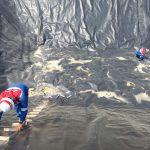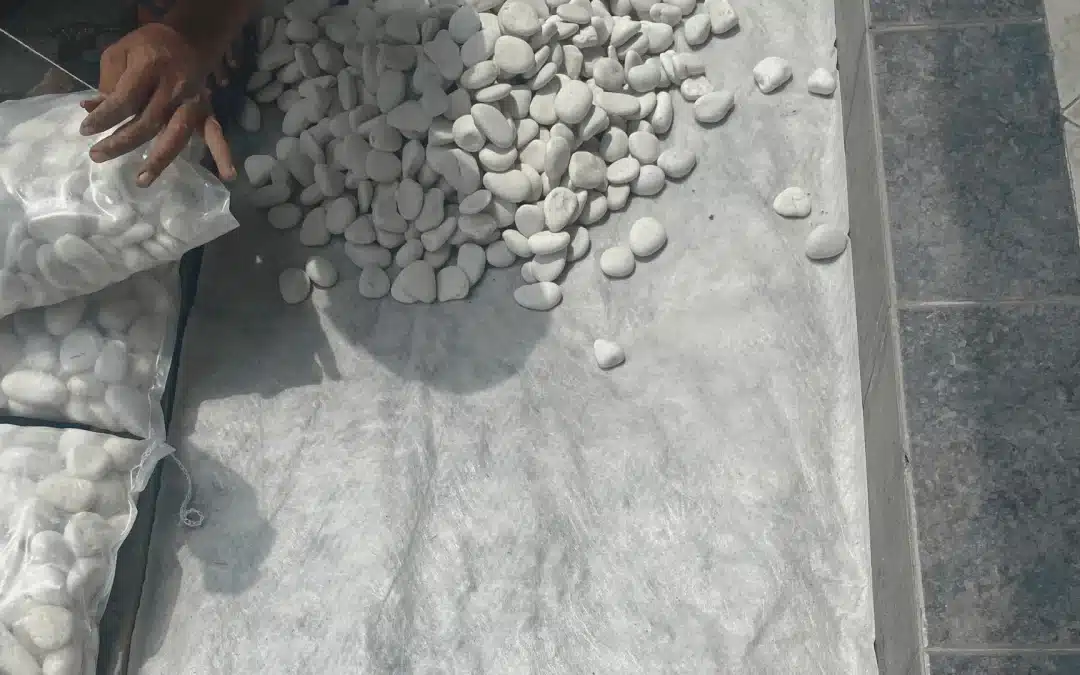
How to install geotextile fabric for drainage systems? is a frequently asked question when designing durable and efficient drainage channels. Proper installation helps water flow smoothly while keeping the aggregate layer clean of fine soil impurities. Non-woven geotextiles are a popular choice because they perform filtration, separation, protection, and erosion control functions in various projects.
Geotextiles are geosynthetic materials that work with the soil to increase construction stability. Non-woven types use polyester (PET) fibers that are bonded or interlocked without weaving. This structure gives this material a high elongation value, making it ideal for drainage applications.
How to Install Geotextile Fabric for Drainage Systems? Installation Steps for Maximum Results
Drainage systems require materials that can allow water to pass without carrying soil particles into the gravel layer. Non-woven geotextiles perform a filtration function, allowing water to flow while retaining fine particles. The result is a cleaner channel and a longer construction life.
This material also acts as a separator, keeping the subgrade and aggregate separate. Mixing these two materials often leads to long-term degradation of drainage quality. Therefore, many projects use non-woven geotextiles for French drains, infiltration channels, roads, and erosion control.
Furthermore, non-woven geotextiles help improve work efficiency. This material supports soil protection, maintains the stability of the construction base, and reduces the risk of blockages in the drainage system. This combination of functions significantly simplifies the maintenance process.
Preparation Before Installation
How to install geotextile fabric for drainage systems? It always begins with proper preparation. Dig a trench according to the working drawings and then shape the channel base so that it is neat and has a sufficient slope to allow water to drain. The depth and width of the trench depend on the needs of each project.
The next step focuses on the condition of the subgrade. Remove roots, sharp rocks, wood, and other debris that could potentially tear the geotextile sheet. Once clean, compact the subgrade to stabilize the surface.
Next, measure the length of the installation area. Cut the non-woven geotextile to a larger size so there is enough fabric left for wrapping on the top. This simple preparation helps speed up installation and reduces errors during the work.
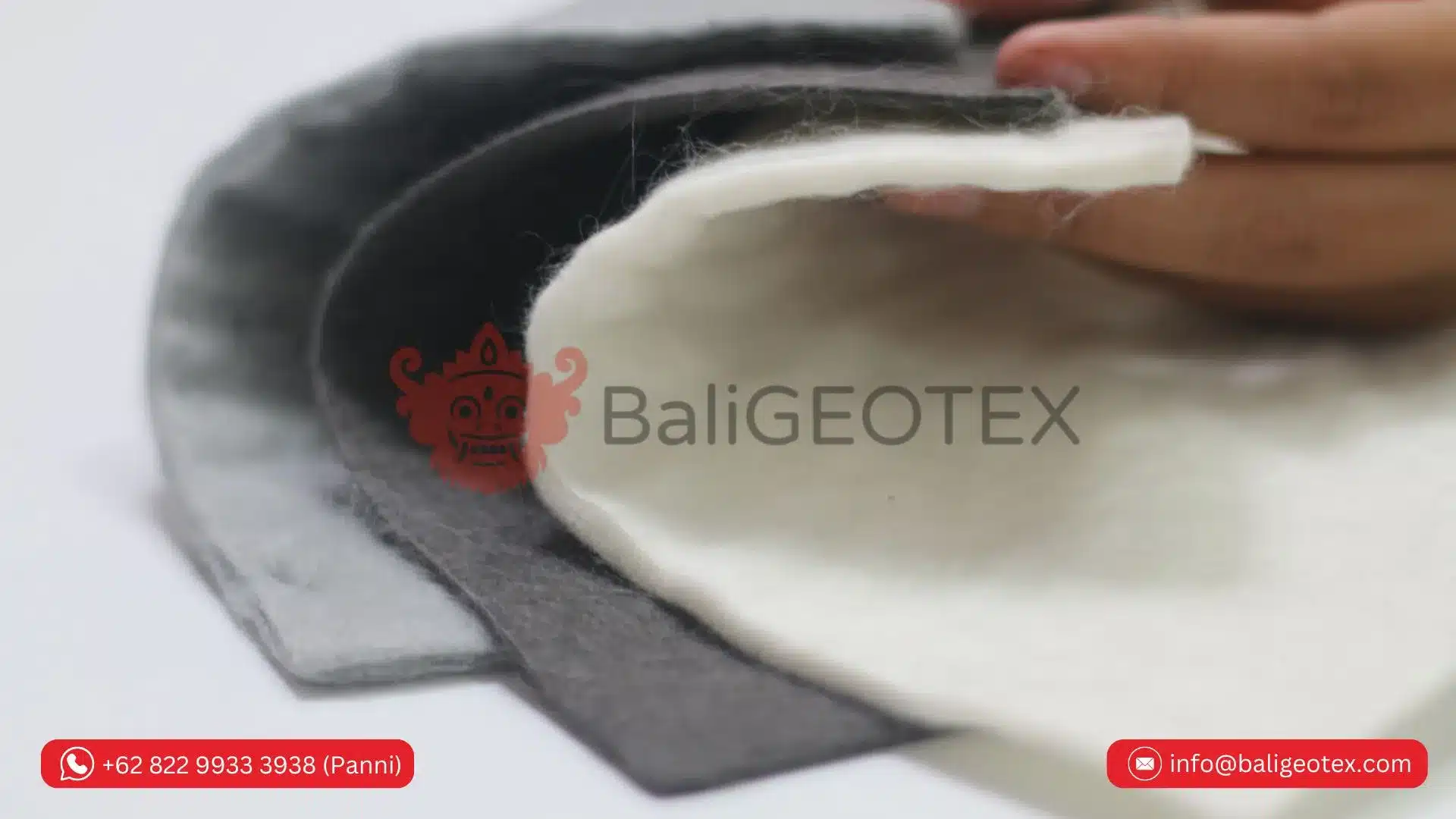
Steps for Installing Non-Woven Geotextile
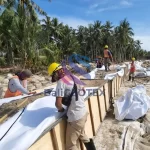
Once everything is ready, roll out the Non-Woven Geotextile to follow the shape of the trench. Ensure the fabric remains flat without folds or wrinkles to ensure optimal contact with the soil. Avoid pulling the fabric over sharp objects, as friction can degrade the material’s quality.
If the channel length exceeds the roll size, connect it using the overlap method. The overlap should be at least 30 cm, and the shingling should follow the water flow. This method helps prevent water from seeping under the joints.
Use fabric pins or landscape staples to stabilize the fabric. Next, spread gravel on the bottom of the channel and place the drainage pipe directly on top of the aggregate. Add another layer of gravel until the pipe is completely covered.
Completion and Final Inspection
How to install geotextile fabric for drainage systems? The installation isn’t complete until the wrapping stage is properly completed. Fold the remaining non-woven geotextile toward the center until the entire gravel and pipe layer is tightly covered. Ensure the top overlap is at least 30 cm to prevent soil from easily seeping into the aggregate.
Continue backfilling with excavated soil or sand as needed for the project. Gradually compact the surface to maintain structural stability without putting excessive pressure on the drainage layer. For road construction, the aggregate cover layer is generally at least 200 mm thick before heavy equipment passes to ensure the material remains protected.
Inspect the entire installation route. Ensure there are no tears, large folds, or open joints. If minor damage occurs, immediately patch it with a similar material to maintain optimal system performance.
In road projects, the selection of geotextile functions also requires consideration of the CBR value. Soil with a CBR greater than 3% generally utilizes geotextiles as a separator, while soil with a CBR of around 1–3% benefits from additional stabilization and protection. This understanding helps ensure a more accurate planning process from the start.
Choosing Quality Materials for Projects
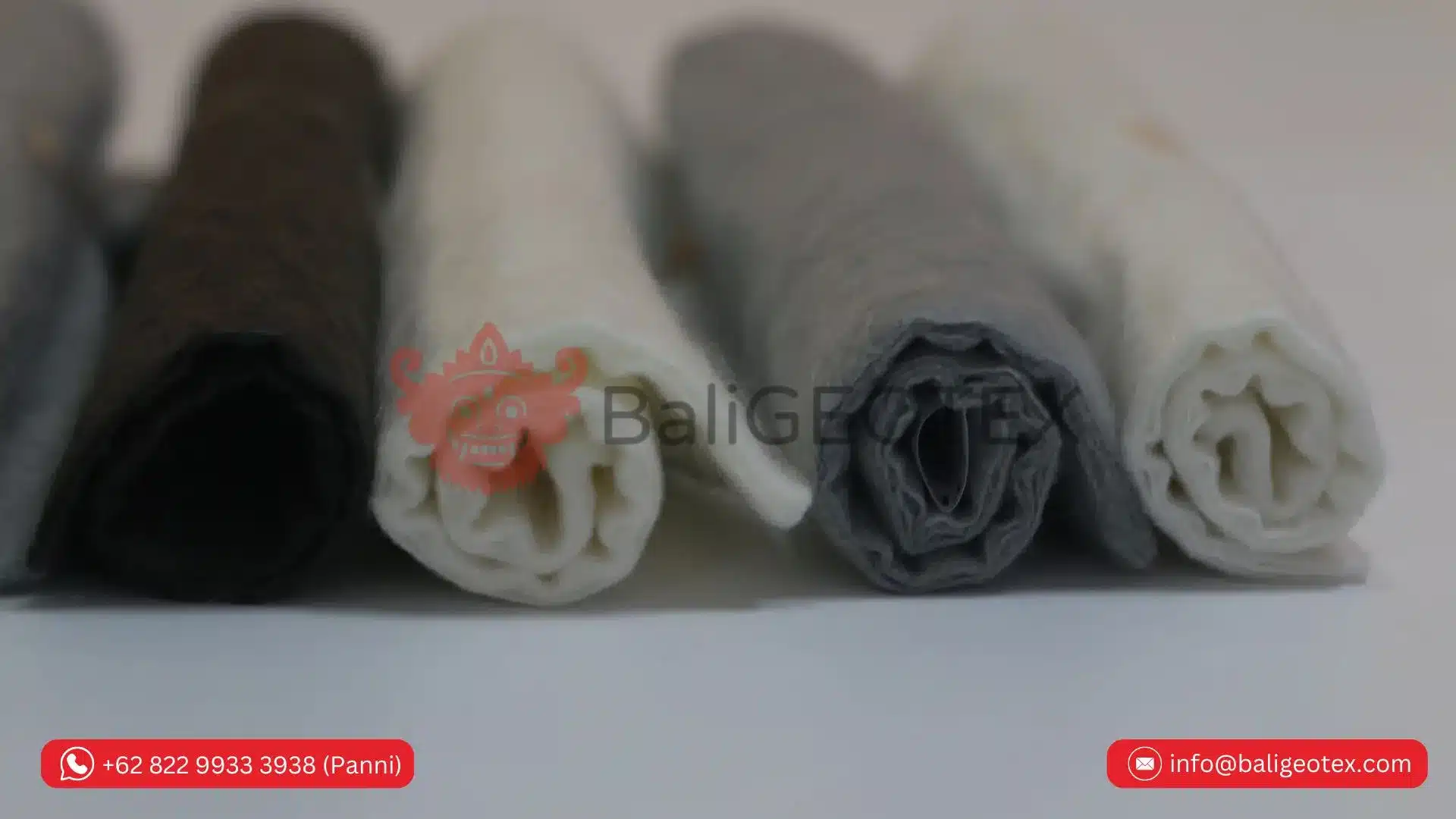
How to install geotextile fabric for drainage systems? Optimal results are achieved when using quality materials. White, carpet-like non-woven geotextiles made from polyester (PET) offer filtration, soil separation, specific foundation reinforcement, and erosion protection. This material also supports improved quality and efficiency in various civil engineering projects.
Urban Plastic non-woven geotextiles are available in various sizes, making it easier to customize to project needs. Competitive cost-effectiveness combined with consistent material quality makes them suitable for both small and large-scale projects. This flexibility helps contractors and project owners find practical solutions without compromising construction performance.
How to install geotextile fabric for drainage systems? It’s actually not complicated as long as each stage is carefully considered. Land preparation, overlap installation, fabric security, pipe placement, wrapping, and final backfilling all contribute to optimal drainage system performance. With quality materials like Urban Plastic non-woven geotextiles, along with the proper implementation of these steps, projects achieve stronger, more efficient, and more durable results.
For more information about Geotextile Non Woven please contact: Whatsapp/Mobile Phone: +62 822 9933 3938 (Ms. Panni) or Email : info@baligeotex.com