In civil engineering and site development, water is the ultimate silent destroyer. Poorly managed subsurface water leads to built-up hydrostatic pressure, soil erosion, and the eventual collapse of paved surfaces or retaining walls. While engineers traditionally default to non-woven felts for standard water filtration, high-stress environments such as deep trench drains under heavy roadways require a material that offers both high water flow and extreme tensile reinforcement simultaneously. Therefore, understanding how to choose geotextile woven fabric for drainage system installations is critical to preventing premature pipe clogging and catastrophic structural failure.
The Big Misconception: Slit-Film vs. Monofilament
The most common mistake site planners make is assuming all woven geotextiles behave the same way. Standard woven geotextiles found in general hardware stores are usually Slit-Film wovens (made from flat, tape-like strands of plastic).
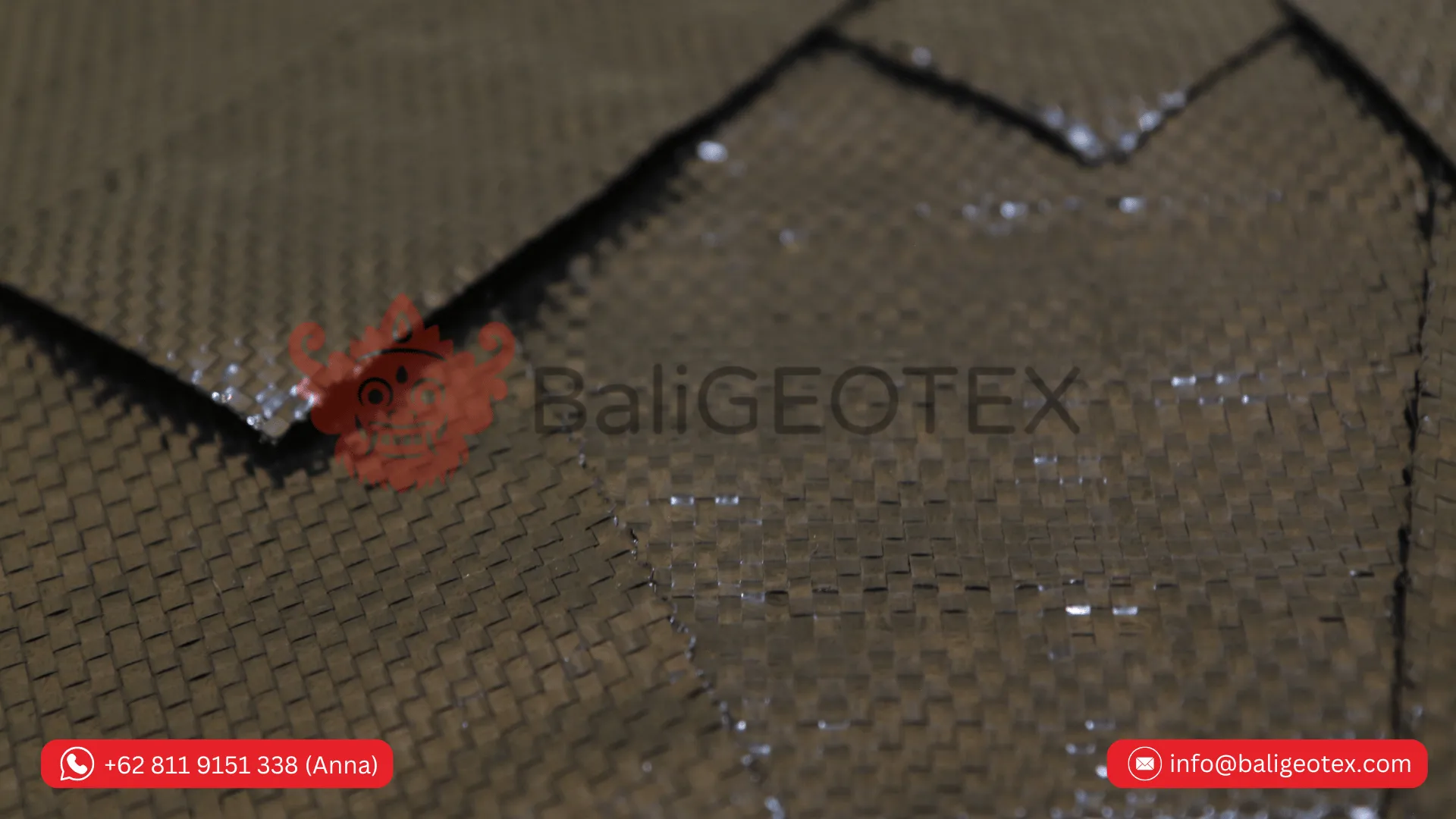
While slit-film is exceptional for stabilizing muddy roads, it is terrible for drainage. The flat tapes sit tightly against one another, creating a nearly impermeable barrier that traps water. If you want to use a woven fabric for sub-surface drainage, you must strictly look for Monofilament wovens or High-Percent Open Area (POA) woven fabrics, which are woven from round, screen-like extruded yarns that allow water to pass through freely.
4 Geotechnical Parameters to Check Before Buying
When reviewing a manufacturer’s Technical Data Sheet (TDS) for a drainage project, ignore the marketing claims and look directly at these four verifiable metrics:
1. Apparent Opening Size (AOS / O95)
AOS indicates the largest approximate soil particle that can pass through the fabric’s mesh, measured in millimeters or standard sieve sizes. The golden rule of filtration is balance: the openings must be small enough to hold back the surrounding soil (preventing internal erosion), but large enough to let water slip through. If your soil is heavy silt, an AOS that is too small will cause the fabric to blind (clog) within the first few heavy rainfalls.
2. Permittivity (Water Flow Rate)
Tensile strength means nothing if the water cannot get through the barrier. Permittivity measures the volume of water that can pass through a one-square-foot area of the fabric per second under a set head of water. For high-performing sub-surface drainage, look for a woven fabric with a high permittivity rating (typically expressed as $sec^{-1}$).
![Woven Geotextile merk BaliGEOTEX[1]](https://indonesiageotextilefabric.com/wp-content/uploads/2026/02/Woven-Geotextile-BaliGEOTEX-4_10_11zon.webp "Woven Geotextile merk BaliGEOTEX[1]")
3. Percent Open Area (POA)
POA is the distinct ratio of open pores to solid fabric. For a woven material to function safely inside a French drain or aggregate wrap, its POA should ideally sit between 4% and 10%. Anything below 1% will act more like a dam than a filter.
4. Polymer Longevity (PP vs. PET)
Ensure the fabric is extruded from premium Polypropylene (PP). Subsurface drainage trenches present severe chemical environments; the surrounding soil can be highly acidic or alkaline. High-grade Polypropylene is completely inert, meaning it will not rot, mildew, or degrade when submerged in groundwater for decades.
Ideal Scenarios for Woven Drainage Wraps
When should you specify a woven fabric over a standard non-woven felt?
- Heavy Traffic French Drains: When the perforated drain pipe is buried directly beneath an active logistics yard or highway subjected to the pounding kinetic weight of 40-ton trucks.
- Coarse Gravel Interlocking: When wrapping large, sharp angular aggregates (like 2-inch crushed stone) that would easily puncture and tear a softer non-woven felt during the backfilling process.
Frequently Asked Questions (FAQ)
Can I use regular black woven weed-mat for a French drain?
No. Standard agricultural weed-mats are flat slit-film wovens designed specifically to block sunlight and trap moisture in the soil. Using them in a French drain will cause water to pool on the surface.
Which side of the woven geotextile faces the soil?
Unlike double-sided agricultural tarps, standard woven geotextiles are structurally uniform on both sides; either side can face the aggregate or the native trench wall.
Securing the Right Material for Your Site
Designing a long-lasting sub-surface water management layout is an exercise in balancing soil retention against hydraulic flow. By mastering how to choose geotextile woven fabric for drainage system infrastructure, you protect your site’s foundation from the expensive hazards of hydrostatic lifting. When your blueprints require verified, laboratory-tested monofilament geosynthetics, reach out to the engineering supply specialists at Urban Plastic to secure heavy-duty, factory-direct materials tailored to your exact site specifications.
For more information about Geotextile Woven please contact: Whatsapp/Mobile Phone: +62 822 9933 3938 (Ms. Panni) or Email : info@baligeotex.com