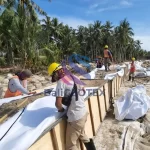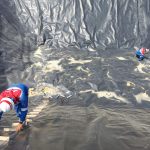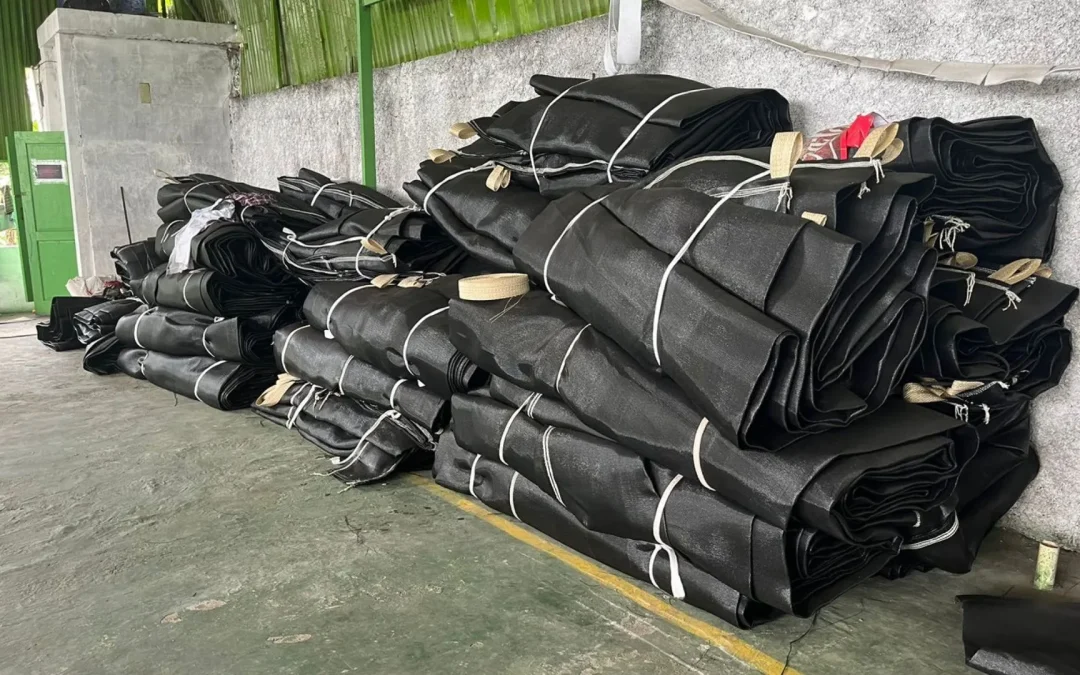
Reclamation projects require a retaining embankment around the area before the infilling process begins. However, constructing such embankments in coastal regions or on islands often presents cost and logistical challenges, particularly when stone must be transported from distant locations. As an alternative, benefits of using geotextile tubes for land reclamations projects allows for the utilization of locally dredged sand to construct retaining structures that are more practical, efficient, and stable.
What Are the Benefits of Using Geotextile Tubes for Land Reclamation?
Geotextile tubes offer a solution for constructing reclamation embankments by utilizing sand available in the vicinity of the site. Benefits of using geotextile tubes for land reclamation projects helps reduce reliance on imported stone while simplifying project logistics.
Here are some of the key benefits:
1. Utilization of Dredged Sand
Geotubes allow projects to use sand dredged from the local site as fill material, thereby reducing the need to source materials from elsewhere.
2. Acceleration of Reclamation Work
Using local sand helps shorten the time required for material procurement. Furthermore, project teams can construct retaining structures without having to wait for the delivery of large quantities of stone.
3. Reduced Need for Heavy Equipment and Trucks
Decreasing the transport of materials from off-site locations helps lower traffic from haulage vehicles. Additionally, the need for handling large-sized stones is minimized.
4. Maintaining Stability on Soft Seabeds
Geotubes can form retaining structures with a wide base, which helps distribute the load across areas of the seabed with limited bearing capacity. For long-term exposure to sunlight, ensure that UV protection is considered.
5. Serving as the Core for Reclamation Embankments
Geotubes can function as the core structure of an embankment. Project teams can then add protective layers or armor to the exterior, in accordance with design requirements.

How Do I Choose the Right Geotube Size for a Land Reclamation Project?
So, how do I choose the right geotube size for land reclamation project? In reality, selecting the appropriate Geotube size should begin with the required crest height of the embankment. From there, calculate the diameter based on the tube’s circumference and adjust it to account for the actual height after filling. This is because a filled Geotube typically reaches a height of only about 50-60% of its theoretical diameter.
Here are the steps for determining the dimensions:
1. Determine the required height of the embankment
Calculate the crest elevation of the embankment based on the reclamation design. The calculation must account for freeboard and estimated ground settlement. This ensures that the Geotube dimensions will meet the required elevation even after settlement occurs.
2. Calculate the theoretical diameter of the Geotube
Use the circumference of the tube as the basis for the calculation. The formula is:
Theoretical diameter = Circumference ÷ π
For example, a Geotube with a circumference of 20 meters (66 ft) has a theoretical diameter of approximately 6.4 meters.
3. Estimate the height after filling
The height of a Geotube after filling typically reaches about 50-60% of its theoretical diameter. Based on the previous example, the actual height would be approximately 3.2-3.8 meters.
Meanwhile, the base width of the structure is estimated to be 1.3-1.5 times the theoretical diameter, or approximately 8.5-9.5 meters.
4. Assess the workspace and configuration requirements
When determining how do I choose the right geotube size for land reclamation project, ensure that the reclamation area provides sufficient space to accommodate the Geotube based on its base width. If a single tube is insufficient to reach the required embankment height, employ a stacked configuration for instance, placing two tubes in the bottom layer and one tube on top.
Regarding the final height-to-width ratio, compare your calculated results against the sizing table provided in the specification sheet for the specific Geotube being used. If the product’s specification table indicates different values, use that product-specific data as your reference. Furthermore, adjust the length of each segment according to the available pump capacity and site conditions.

Other Factors That Affect Geotube Size Selection
Beyond dimensions, several technical factors must be incorporated into the planning process:
- Scour apron: Add protection at the base of the Geotube to help mitigate the risk of scouring around the structure.
- Fill material: Use material with a high sand content to ensure that the filling process and the resulting shape of the tube align with design requirements.
- Sunlight exposure: Geotubes exposed to UV radiation for extended periods require additional protection. Consider recommended protective materials based on specific project conditions.
Selecting a Geotube for land reclamation requires evaluating three key aspects the target embankment height, seabed conditions, and the availability of local sand. Diameter calculations must account for the actual height achieved after filling, rather than relying solely on the theoretical diameter. By tailoring dimensions to field conditions and product specifications, benefits of using geotextile tubes for land reclamation projects can facilitate more efficient and stable construction.
For more information about Geotube please contact: Whatsapp/Mobile Phone: +62 822 9933 3938 (Ms. Panni) or Email : info@baligeotex.com