Many industrial and environmental projects share the same awkward problem: you end up with an enormous volume of wet, muddy material dredged sediment, treatment-plant sludge, mine tailings, pond clean-out and most of it is water. Moving that water around is expensive, slow, and often unnecessary. Geotextile tube dewatering is one of the neatest answers to that problem, and it works on a principle simple enough to grasp in a single sentence: hold the solids, let the water out.
This guide explains how geotextile tubes dewatering works, where it’s used, and why it’s become a go-to method across Australian dredging, wastewater, and remediation projects.
What Is Geotextile Tubes Dewatering?
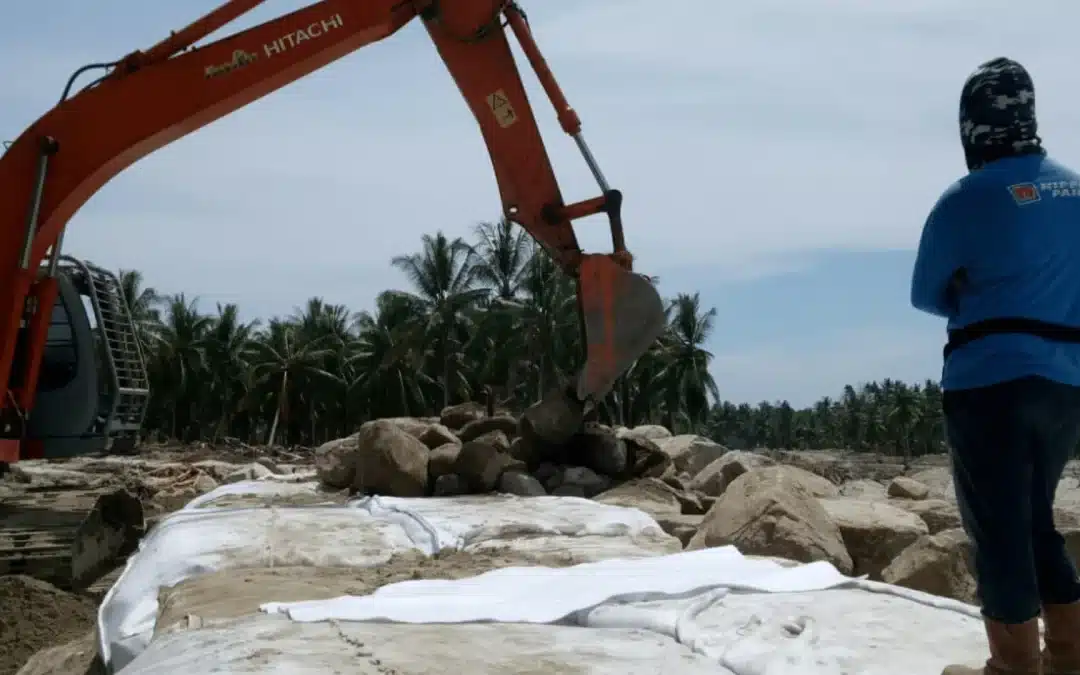
Geotextile tubes dewatering is a process that uses large tubes made from engineered woven geotextile fabric to separate solids from liquids. The wet slurry is pumped into the tube; the fabric is permeable enough to let water drain out through its pores, but tightly woven enough to trap the solid particles inside. Over time, the trapped material consolidates and dries, while relatively clean water filters out and drains away.
The result is a large, firm mass of dewatered solids contained inside the fabric, and a much smaller volume of water to manage. What arrived as a soupy slurry leaves as a compact, stackable solid, often reducing the material’s volume dramatically.
How the Dewatering Process Works
Geotextile tubes dewatering usually happens in three overlapping stages.
1. Filling
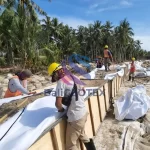
The slurry is pumped into the geotextile tube through inlet ports along its top. In most cases, a coagulant or flocculant is added to the slurry first. These conditioning chemicals bind the fine particles together into larger clumps (flocs), which are far easier to trap and which dramatically speed up the whole process. Getting this chemistry right is often the difference between a fast, clean dewater and a slow, messy one.
2. Dewatering
Once the tube is filled, water begins draining out through the fabric under the pressure of the fill. This is the main dewatering phase. Clear effluent seeps through the weave and runs off — frequently clean enough to return to the source water body or recirculate, though this depends on the material and local requirements. As the water leaves, the volume inside the tube drops, and the tube can be topped up with more slurry through repeated fill cycles.
3. Consolidation and Drying
After the final fill, the contained solids continue to consolidate and dry through the fabric over days, weeks, or months, depending on the material and the climate. The end product is a dry, dense cake of solids. Depending on what it is, this material can then be removed and disposed of, used as fill, or in some cases beneficially reused.
![Geotextile Tube BaliGEOTEX[1]](https://indonesiageotextilefabric.com/wp-content/uploads/2026/02/85_10_11zon.webp "Geotextile Tube BaliGEOTEX[1]")
Where Geotextile Tubes Dewatering Is Used
The method is remarkably versatile, which is why it turns up across so many industries.
- Dredging. When harbours, marinas, canals, and rivers are dredged, the dredged sediment is pumped straight into geotextile tubes on shore to dewater, avoiding the cost of barging wet spoils elsewhere.
- Wastewater and water treatment. Municipal and industrial treatment plants use the tubes to dewater sludge and biosolids, cutting the volume that has to be trucked away.
- Agriculture and aquaculture. Manure slurry, pond sludge, and process waste from farms and fish operations are dewatered on site.
- Mining and industry. Tailings, process slurries, and wash-plant fines are contained and dried, recovering water and reducing pond demand.
- Environmental remediation. Contaminated sediments can be contained and dewatered within the tube, keeping the solids sealed while treated water drains off a controlled way to handle sensitive material.
Across Australia, where water recovery, transport costs, and environmental compliance all carry real weight, this combination of benefits makes the technique especially appealing.
Why Choose Geotextile Tubes for Dewatering?
- Big volume reduction. Removing water shrinks the material dramatically, slashing haulage and disposal costs.
- Low energy and simple operation. Compared with mechanical dewatering equipment like centrifuges or belt presses, the tubes are passive the pumping does the work and gravity and the fabric do the rest.
- Contained and tidy. Solids stay sealed inside the fabric, which helps control odour, dust, and spillage on site.
- Scalable. From a small pond clean-out to a major dredging campaign, you simply size and number the tubes to suit.
- Water recovery. The filtered effluent can often be reused or returned, which matters in a dry climate.
Getting the Best Results
A few things separate a smooth dewatering operation from a frustrating one:
- Match the fabric to the material. Fine, silty sediments need a different fabric pore structure than coarser sands. The right specification keeps solids in without blinding (clogging) the fabric too quickly.
- Get the conditioning chemistry right. The correct flocculant, dosed correctly, is often the single biggest factor in dewatering speed and effluent clarity. It’s worth testing the specific material first.
- Prepare the containment area. Tubes need a prepared, gently sloped pad with drainage so the released water is collected and directed properly.
- Plan the fill cycles. Filling in staged cycles, letting the tube dewater between fills, achieves far more capacity than trying to fill in one go.
![Geotextile tube BaliGEOTEX[4]](https://indonesiageotextilefabric.com/wp-content/uploads/2026/02/82_7_11zon.webp "Geotextile tube BaliGEOTEX[4]")
Frequently Asked Questions
How long does geotextile tubes dewatering take?
It varies with the material, the conditioning used, and the climate. Rapid initial drainage often happens within hours to days, while full consolidation and drying of the contained solids can take weeks to months. Warm, dry conditions speed things up.
Is the water that drains out clean?
The effluent is usually much clearer than the incoming slurry and, with the right conditioning, can often be returned to the source or reused. Whether it meets discharge standards depends on the material and local regulations, so it’s typically tested.
What happens to the material inside the tube afterwards?
Once dried, the contained solids can be removed for disposal, used as fill, or beneficially reused, depending on what the material is and what regulations allow. In some cases the tube and its contents are simply left in place as part of a permanent structure.
How does it compare to mechanical dewatering?
Mechanical systems like centrifuges and presses dewater faster in a smaller footprint but cost more to run and maintain. Geotextile tubes are slower and need more space, but they’re low-energy, simple, and very cost-effective for large volumes which is why they’re favoured for dredging and big sediment jobs.
Summary
Geotextile tubes dewatering solves a common and costly problem with an elegantly simple idea: pump in the slurry, let the fabric hold the solids and release the water. What starts as a huge volume of wet, hard-to-handle material ends up as a compact, dry solid and a stream of recoverable water.
From dredging harbours to drying treatment-plant sludge, the method’s mix of low energy use, big volume reduction, and water recovery keeps it relevant across Australian industry. Get the fabric specification and conditioning chemistry right, prepare the site well, and geotextile tubes dewatering turns one of the messiest jobs on any project into one of the most manageable.
For more information about Geotube please contact: Whatsapp/Mobile Phone: +62 822 9933 3938 (Ms. Panni) or Email : info@baligeotex.com