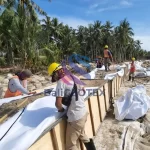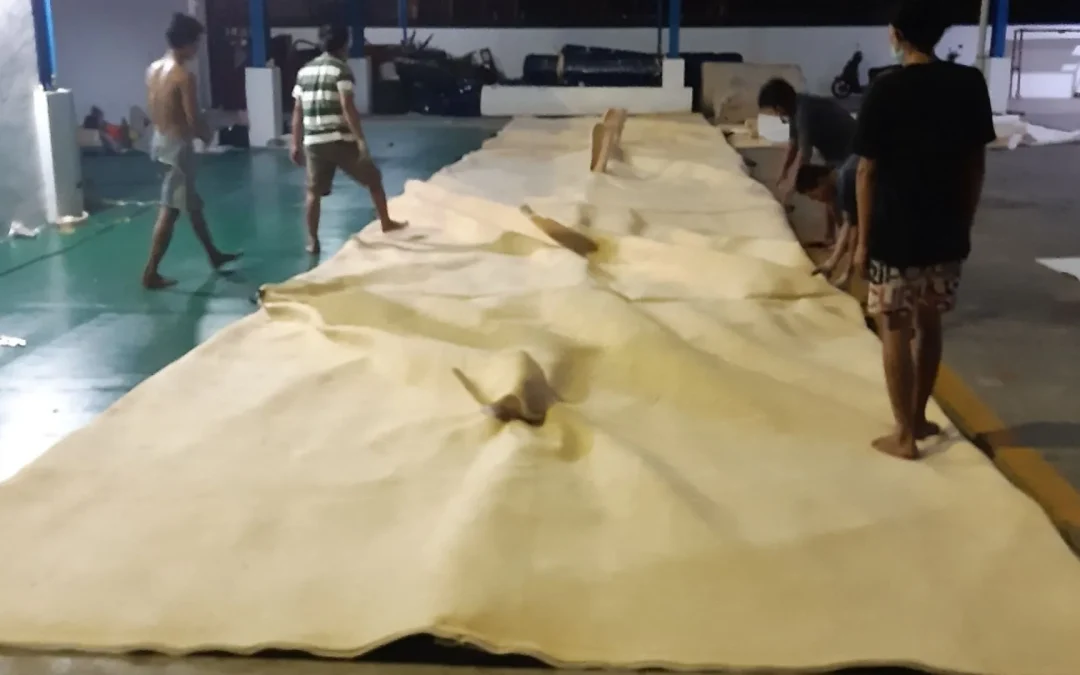
Geotextile fabric tube is a material widely used in various environmental projects due to their ability to effectively retain, filter, and manage sediment. This tube-shaped material, made from geotextile fabric, is commonly used in erosion control projects, coastal protection, mud management, and even dewatering processes in construction and wastewater treatment.
Utilization of Geotextile Fabric Tube
Geotextiles play a number of important roles in construction projects because they can increase both the durability and efficiency of a project. One of their primary uses is as a separating layer between different soil types. In road and bridge construction, soil with low bearing capacity often lies beneath stronger material. The presence of geotextiles helps keep the two layers separate, preventing them from mixing and maintaining structural stability.
In addition to functioning as a separator, this material is also used as a filtration medium. Geotextiles allow water to flow through the soil layer while preventing fine particles from entering the drainage system or other construction components. This filtration is important to prevent blockages that can disrupt the performance of water channels. Non-woven geotextiles are known to be effective for filtration purposes because they have pores that allow water to pass through while retaining small soil particles.
The use of geotextiles also plays a role in strengthening soil structure. In projects built on soft soil or clay, this layer helps increase the soil’s load-bearing capacity. Geotextiles are often chosen because of their high tensile strength, which can increase the bearing capacity of the soil surface. They are widely used in the construction of highways, toll roads, and railways. Furthermore, these materials can help reduce soil shifts and extend the service life of infrastructure.

Types of Geotextiles and Their Applications
Geotextiles consist of several types used for various needs in the construction and environmental management sectors. Some of these include nonwoven geotextiles, woven geotextiles, and tubular geotextiles. Each type has different characteristics and functions, so selection must be tailored to field conditions, intended use, and project technical specifications. By selecting the right material, structural performance and the effectiveness of soil or sediment control can be optimally improved.
Geotextile Tube
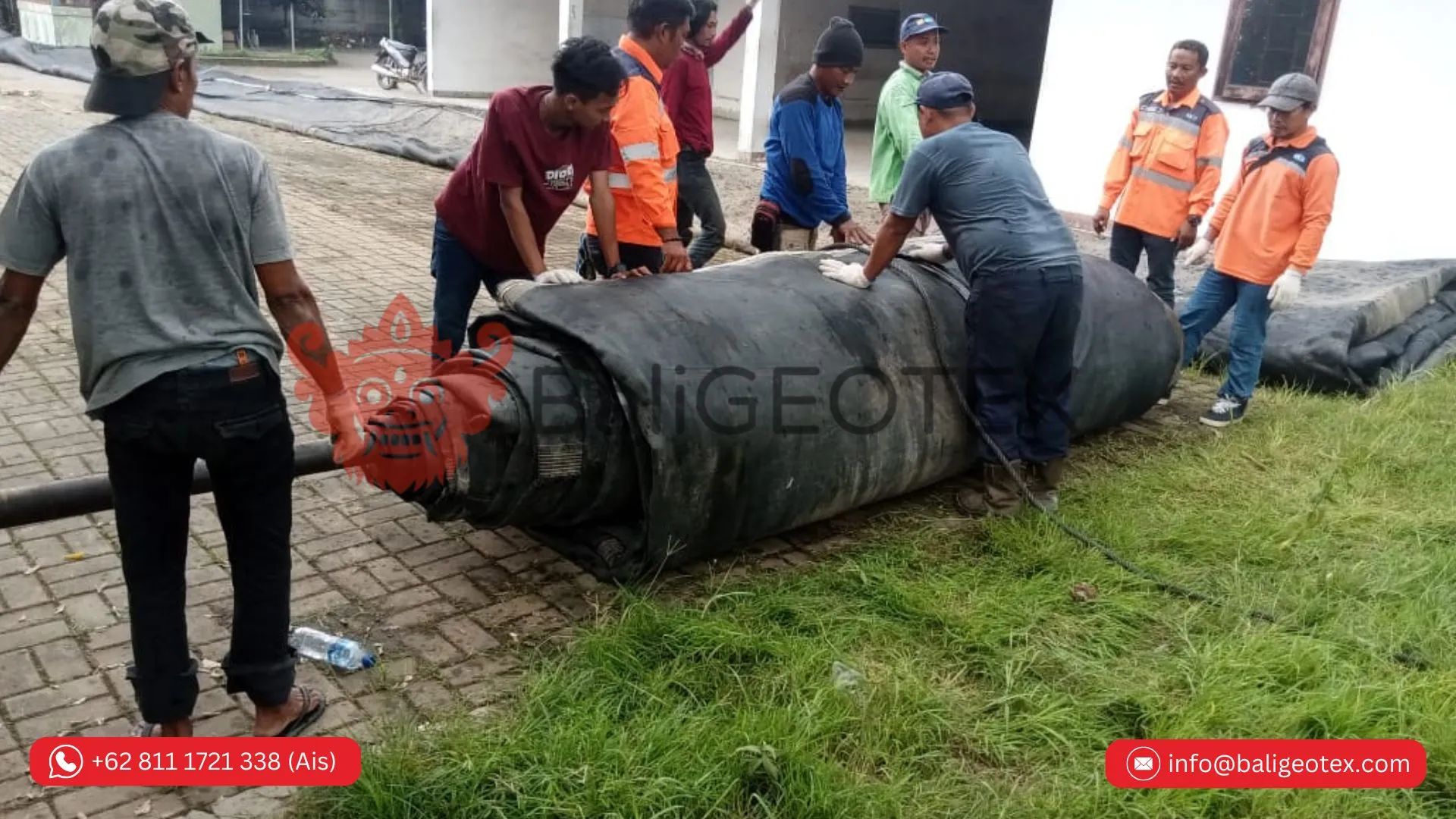
Geotextile fabric tubes are geotextile materials shaped like large tubes and filled with sand or other granular materials. This structure is widely used in coastal protection projects, wave control, and embankment construction in areas prone to abrasion.
Geotextile tubes serve to strengthen coastal areas and riverbanks, minimizing the risk of damage from waves or strong water currents. Furthermore, this technology is often chosen because of its relatively efficient installation process and its ability to support land stability in environmental engineering projects.
Woven Geotextile
Woven geotextiles are materials made from tightly woven synthetic fibers or yarns, creating a strong structure capable of withstanding significant pressure. This product is widely used in civil engineering projects, particularly to reinforce soil and separate different soil layers.
Its application is often found in toll road construction projects, railway lines, and other construction projects requiring enhanced soil stability. In addition to increasing the soil’s bearing capacity, this material also helps maintain structural stability, making it more resistant to shifting and deformation.
As a material with diverse functions in construction and environmental management, geotextile fabric tubes are an effective solution for maintaining soil stability and controlling sediment in various projects. Their use not only supports infrastructure resilience but also helps minimize environmental impacts through material management and protection of areas vulnerable to erosion and abrasion.
For more information about Geotextile Tube please contact: Whatsapp/Mobile Phone: +62 8173 91338 (Ms. Agnes) or Email : info@baligeotex.com