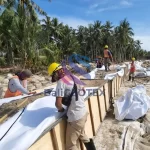
How much does geotube cost is often discussed. This is especially true given that geotubes are a modern engineering solution that is increasingly being used today, especially in various environmental and construction projects. Thanks to their flexibility and efficiency, geotubes are often a more practical alternative, especially when compared to conventional methods, such as settling ponds or off-site sludge transport.


How Much Does Geotube Cost and Their Important Functions
For those unfamiliar, geotubes are large tubes made of highly porous geotextile material. They have very strong tensile strength. These tubes are designed to contain materials such as mud, sand, sediment, or dredged waste. Liquid material is pumped into the geotube, while the water drains out through the pores of the geotextile fabric. The end result is a solid material remaining in the tube. The use of geotubes offers several advantages. Geotubes significantly reduce the volume of wet material, making it easier to handle and dispose of. Furthermore, this system can be applied in confined areas, minimizing environmental disruption.
In coastal protection projects, geotubes often serve as the core structure of wave breakwaters or temporary embankments. Meanwhile, in industrial and wastewater treatment projects, geotubes play a crucial role in efficiently separating water and solids. Given this significant role, it’s natural that many parties consider the cost aspect before deciding to use geotubes.
How Much Do Geotube Cost? Factors Affecting Cost
Geotube costs cannot be generalized. This is due to the influence of multiple contributing factors.. One of the most influential factors is the geotube’s size. The length, diameter, and volume of the tube determine how much material the geotube can hold. The larger the capacity, the higher the geotube’s specifications, which directly impacts the cost.
Furthermore, it relates to the type and specifications. Geotubes made from geotextiles with specific characteristics will command a higher price. For example, tensile strength, UV resistance, and pore size are important. Projects with heavy loads or extreme environmental conditions require higher-specification geotextiles. These material specifications significantly impact the overall cost.
The filling method and supporting equipment also play a role, including the type of pump, working pressure, and the use of additional materials, such as polymers to accelerate the dewatering process. The more complex the system, the higher the operational costs. Next, the location of geotube installation plays a crucial role. Projects in remote areas, coastal areas, or locations with limited access typically require additional preparation, such as land leveling or special protection. Weather and environmental conditions can also affect the duration and cost of the project.
Finally, the duration of use. Whether the geotube is used temporarily or as a long-term structure also affects the cost. Long-term use requires more durable materials and a robust design, which will also be relatively expensive.
When discussing how much does geotube cost, it’s important to understand that they don’t stand alone as a fixed figure. The cost depends on the project’s needs, technical specifications, environmental conditions, and application method. By understanding these cost-influencing factors, project planners can choose the most efficient geotube solution.
For more information about Geotube please contact: Whatsapp/Mobile Phone: +62 811 1721 338 (Ms. Ais) or Email : info@urbanplastic.id.